Structural drying and water mitigation
Water Mitigation and Structural Drying in the Phoenix Valley
Water mitigation is the work of stopping water damage from spreading and getting a building dry before secondary problems set in. Triology Restorations handles the mitigation phase for homes and commercial properties in the greater Valley, from the first moisture readings to the last dry check. Our line is answered 24/7, and the inspection is free.
- Moisture detection and mapping to find hidden water
- Structural drying and dehumidification with monitored equipment
- Documentation of readings and photos throughout the job
- Arizona ROC licensed contractor, license #347115
What Our Customers Say
Real reviews from homeowners and businesses across the greater Phoenix area.
What Water Mitigation and Water Remediation Mean
Mitigation is the phase of a water loss that limits harm. It begins once the source is stopped and the visible water is being removed, and it continues until the structure reaches normal moisture levels. Insurance paperwork often uses the word mitigation for this stage, and contractors and carriers sometimes say water remediation when they mean the same work.
The goal is simple to state. Materials that got wet should be dried before they warp, stain, break down or grow mold, and materials that cannot be dried should be identified early and removed. Mitigation is about making those calls with measurements instead of guesses.
If standing water is still present, extraction comes first. Our emergency water removal team handles that stage, and the mitigation work picks up from there.
Learn about emergency water extractionThe Structural Drying Process Step by Step
Drying a building is a controlled process, not a matter of leaving fans running. This is the sequence our crews follow.
- Step 1
Assessment and Moisture Mapping
We measure moisture in walls, floors and ceilings and map where it is. The map shows the true boundary of the loss, which is usually larger than the stain you can see.
- Step 2
Removal of Materials That Cannot Be Dried
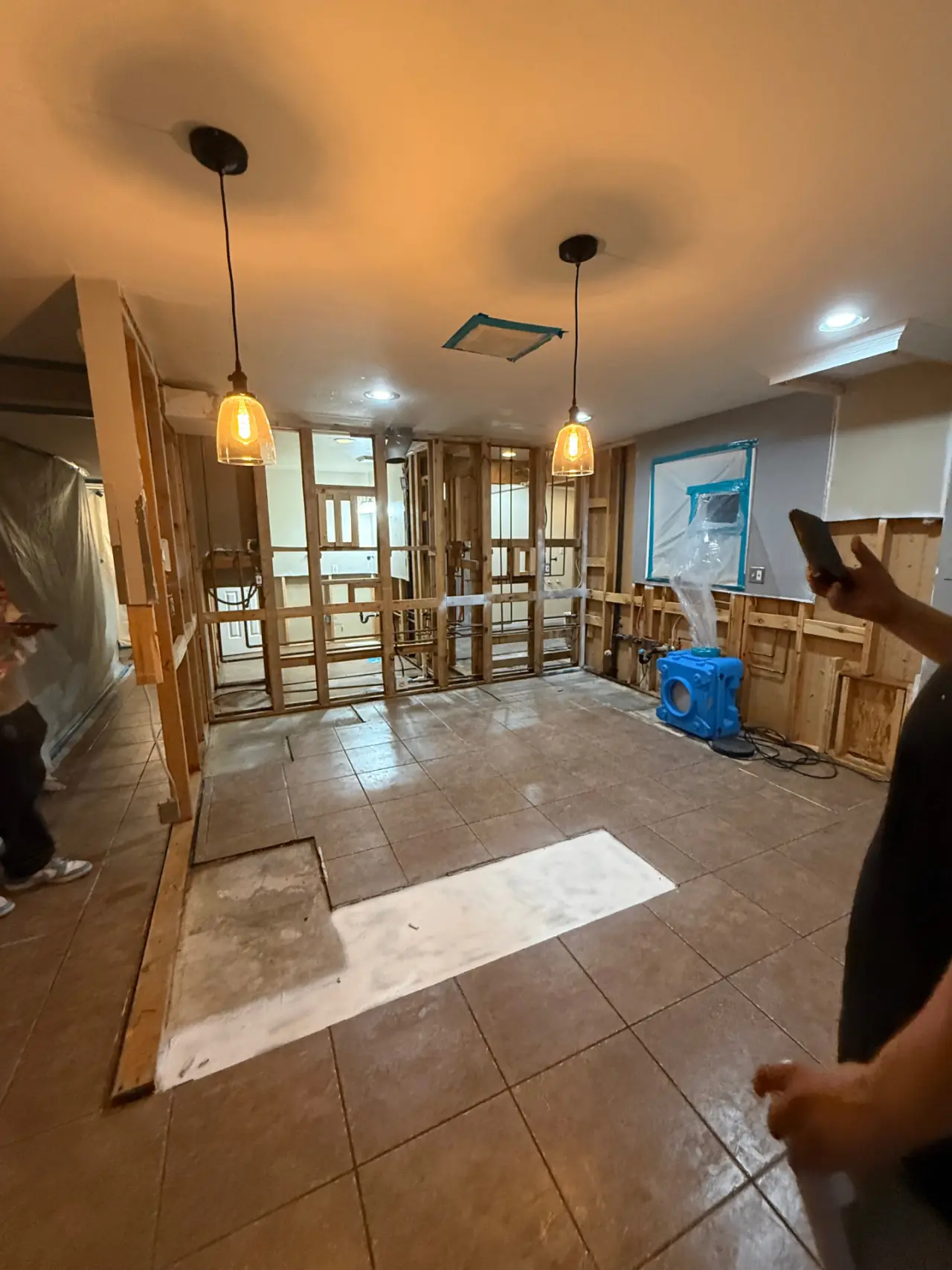
Some materials, such as saturated padding or swollen insulation, are faster and safer to remove than to dry. We identify these early so they do not hold moisture against the structure.
- Step 3
Air Movement
Air movers are placed to push moving air across wet surfaces and into wall cavities where access allows. Placement follows the moisture map.
- Step 4
Dehumidification
Dehumidifiers pull the moisture out of the air so the wet materials can release it. Without this step, the water simply moves from the structure into the air and back again.
- Step 5
Equipment Monitoring
We return to check readings and adjust equipment. Drying progress is recorded, so the job is driven by data instead of a fixed schedule.
- Step 6
Final Readings and Documentation
When readings show the structure is dry, we record them and provide the documentation trail. That record is useful for owners, property managers and adjusters.
Not sure what you need?
Call and a live person will walk you through it, any hour, or request a free inspection.
Equipment Used for Water Damage Drying
Three categories of tools do most of the work in water damage drying.
Air Movers
Compact, high-velocity fans that direct airflow across floors, walls and cabinet bases. They speed the release of moisture from surfaces and from the materials just beneath them.
Dehumidifiers
Commercial-grade units that remove water vapor from the air in the affected area. They keep the room dry enough for wet materials to keep giving up moisture.
Moisture Meters and Mapping
Instruments that read moisture inside building materials. We use them at the start to map the loss, during the job to track progress and at the end to confirm results.
Why Dry Arizona Air Does Not Dry Your Walls
Many people assume that desert air will dry out a wet house on its own. Dry outdoor air does little for the inside of walls, cabinets and subfloors, so hidden moisture can linger long after the surface looks fine.
That is why structural drying relies on measurement. A floor can feel dry to the touch while the subfloor beneath it is still holding water, and a painted wall can hide a wet cavity behind it. Leaving that moisture in place is how a small loss turns into a larger one.
Places moisture hides
- Inside wall cavities behind painted drywall
- Under and behind base cabinets
- Beneath hardwood and laminate flooring
- In the subfloor below tile
- Behind baseboards and trim
- Within insulation above a wet ceiling
Mold After Water Damage and Why Drying Matters
Mold after water damage is a real possibility whenever materials stay damp for days. It develops where moisture lingers, often out of sight. Mold can affect indoor air quality, and anyone with sensitivities should talk to a doctor about their situation.
Thorough structural drying is the most practical way to reduce that risk, because it removes the moisture mold depends on. If mold is already present when we arrive, our mold remediation team can inspect, contain and treat it, and we address the moisture source as part of that work.
Explore all of our water damage servicesReady for a free inspection?
We look at the damage, document it and explain the next steps before any work starts.
Signs a Structure Is Not Yet Dry
Watch for these after a leak, even if the visible water is gone.
- A musty smell that returns in one room
- Flooring that cups, buckles or lifts at the edges
- Paint that bubbles or peels
- Baseboards that feel cool or damp to the touch
- Humidity that stays high in a single area
- Stains that reappear after cleaning
Any of these is a reason to call for moisture readings before repairs begin.
Mitigation Records and Insurance Claims
Drying produces the records an adjuster looks for: photos, moisture readings and equipment logs. From that material we prepare a restoration scope, and we talk with the adjuster once you give the go-ahead. Direct billing is possible where approved and applicable.
Coverage, deductibles and approval belong to your carrier. Our part is making sure the documentation is accurate and complete.
Insurance claims supportService Areas
Water Mitigation and Drying by City
24/7 Emergency Response
Property Damage Cannot Always Wait Until Tomorrow
Call Triology Restorations for responsive residential and commercial restoration services throughout the Phoenix Valley.
Available 24/7 for emergency calls.
Request an Inspection
Tell us what happened and a member of the Triology Restorations team will contact you.
Call 480-772-0058