
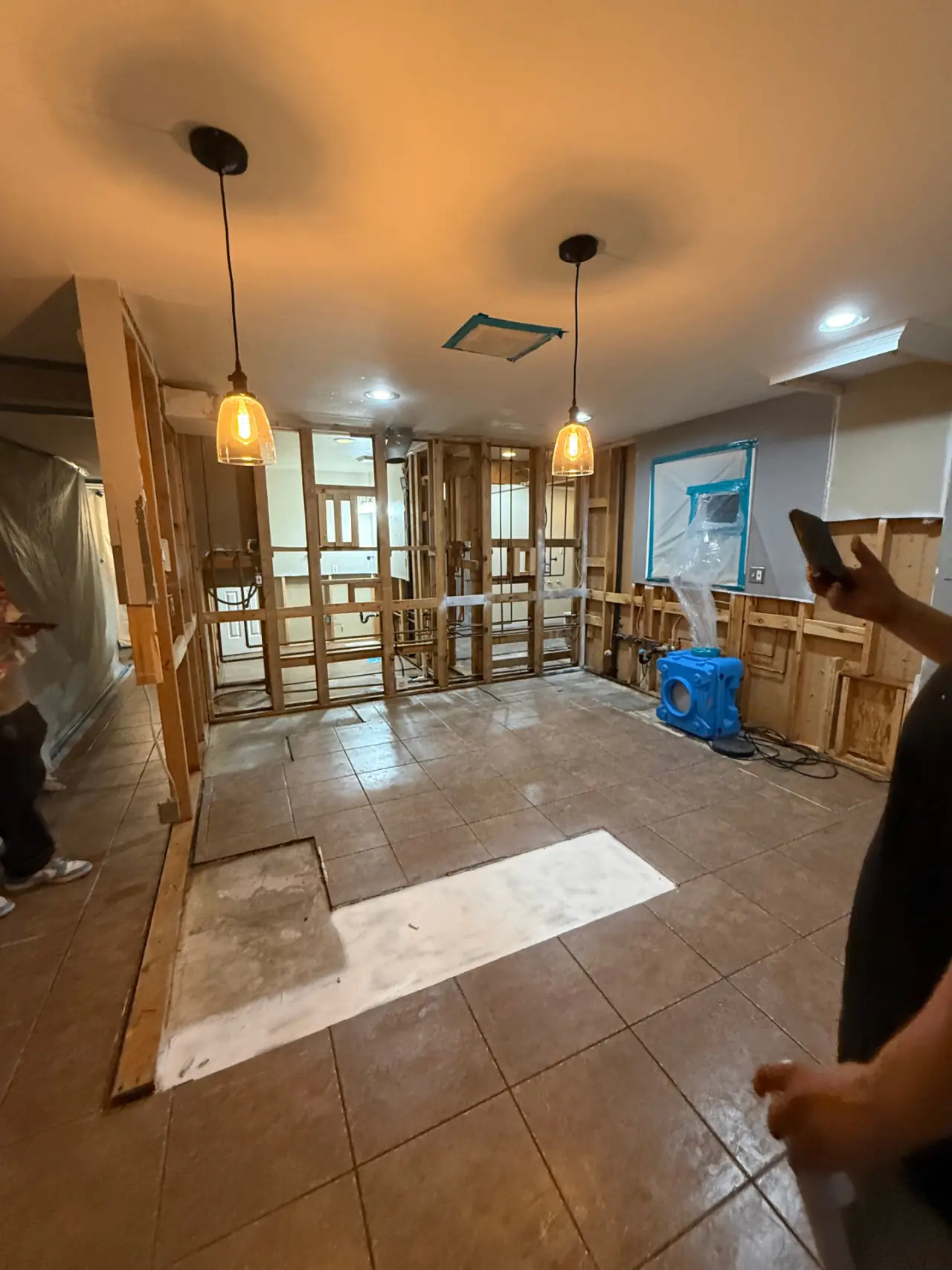
Water Mitigation in Mesa
Drying Mesa Homes and Buildings Down to the Slab Once the Water Is Gone
Triology Restorations provides water mitigation in Mesa after the standing water has been removed. We measure where moisture is still hiding, set air movers and dehumidifiers, and come back to check readings until the structure is dry. Call 480-772-0058 at any hour to schedule a free inspection.
- Live answer 24/7 from our own team
- Arizona ROC licensed contractor, license #347115
- Free inspection, meter readings included
- Homes, condos, manufactured homes and businesses
Services in Mesa
What happened at your property?
- Water Damage RestorationExtraction, drying and restoration
- Emergency Water ExtractionStanding water removed fast
- Burst Pipe CleanupPipe, water heater and appliance leaks
- Flood Damage RestorationMonsoon and flood cleanup
- Ceiling Water DamageLeaks through the ceiling, dried and restored
- Water Mitigation and DryingMoisture mapping and structural drying
- Mold RemediationContainment, removal and the moisture source
- Fire and Smoke DamageSoot, smoke odor and firefighting water
- Commercial RestorationOffices and commercial properties
What Our Customers Say
Real reviews from homeowners and businesses across the greater Phoenix area.
Water Damage Mitigation in Mesa: Why the Desert Air Is Not Enough
People are often surprised that a wet room in Mesa does not dry by itself. The air outside is dry, so a damp baseboard can look fine by evening. Behind it, though, the drywall, the bottom plate of the wall and the concrete under the carpet can stay wet for a long time. Nearly every house here sits on a slab, and concrete gives up water slowly. Cabinet bases, toe kicks and the underside of vinyl plank behave the same way.
Water damage mitigation in Mesa means controlling that hidden moisture on purpose. We pull it out of the structure at a measured pace, keep it from spreading into rooms that were dry, and prove it is gone with readings instead of a guess. Skipping this stage is how a clean-water leak in July becomes a musty closet by October.
This page covers the drying stage only. If the water is still standing, start with extraction. If you want the whole picture of a Mesa water loss, our city overview walks through every stage.
Water damage restoration in Mesa, start to finishHow Structural Drying in Mesa Runs
A drying job follows the readings, not the calendar. Here is the order we use in Mesa homes and commercial buildings.
- Step 1
Map the Moisture
Meter readings go on a sketch of the floor plan, covering walls, floors and cabinets, including spots that look dry. Readings from unaffected rooms in the same building become the target we dry toward.
- Step 2
Take Out What Will Not Dry
Soaked pad, swollen particleboard and drywall that has wicked water high up the wall are removed and documented, so the materials left in place can actually dry.
- Step 3
Set Air Movers and Dehumidifiers
Air movers push moisture out of surfaces and dehumidifiers pull it out of the air. Placement depends on the moisture map, and wall cavities or cabinet bases may be opened slightly to let air reach them.
- Step 4
Check Readings and Adjust
We return to measure the same points, record the numbers and move or remove equipment as each area improves.
- Step 5
Sign Off on Dry
Once every point reaches its dry target, we pull the machines and hand over the full moisture log with photos. That record is what an adjuster looks for.
Not sure what you need?
Call and a live person will walk you through it, any hour, or request a free inspection.
Water Damage Drying in Mesa Depends on the House
Mesa's housing runs from homes in the central historic districts to homes finished last year, and each type dries differently.
1970s and 1980s Homes
The 1980s is Mesa's single largest building decade at 23.9 percent of housing units, followed by the 1970s at 19.2 percent. In these homes we check what sits under the finish flooring before deciding whether to dry it in place.
Historic Districts Near Downtown
Glenwood/Wilbur dates to 1892 and Evergreen was platted in 1911. Older construction near the Temple Historic District gets a careful look at what can be dried where it stands before anything is cut out.
Eastmark and Cadence at Gateway
Eastmark opened with seven model homes around 2013 and had 7,000 houses by April 2023. Newer cabinets and floating floors can trap water underneath, so we measure below and behind them.
55+ and Manufactured-Home Communities
In Leisure World, Sunland Village, Fountain of the Sun and Apache Wells, residents often stay in the home during drying. We place equipment to keep walkways clear and explain each machine and its noise.
Water Remediation in Mesa: What Gets Removed and What Gets Dried
Not every wet material has to go. Solid wood, concrete and many tile floors dry well with the right setup. Materials that soak up water and break down, like carpet pad, particleboard and the lower part of saturated drywall, usually cannot be saved. Water remediation in Mesa is mostly a series of these decisions, made one room at a time and explained before we act.
The type of water matters too. A clean supply line leak leaves more materials worth drying where they are. Storm runoff or a drain backup means contaminated water, and more of what it touched comes out.
Readings We Track on Every Job
- Moisture content in drywall and framing at the base of walls
- Slab readings under carpet and flooring
- Cabinet base and toe kick moisture
- Room humidity and temperature
- Dehumidifier output from one visit to the next
Living With Drying Equipment in Your Mesa Home
Drying works fastest when the equipment runs without interruption. While it is set up:
- Leave air movers and dehumidifiers on, even overnight
- Keep doors and windows to the drying area closed
- Run the AC at a normal setting rather than shutting it off
- Keep pets and small children away from cords and fans
- Let us know if you notice a new smell or a new stain
- Plan for someone to let us in for each moisture check
Seasonal residents can authorize a neighbor or property manager to handle access while the readings come to them.
Ready for a free inspection?
We look at the damage, document it and explain the next steps before any work starts.
Before Drying Starts: Extraction and the Source
Drying cannot begin while water is still standing or still running. If there is water on the floor, our Mesa water extraction page explains how we pump and pull it out first. If the cause is a failed water heater, supply line or slab leak, the plumber stops the leak and then we dry, and our Mesa burst pipe cleanup page covers that hand-off in detail.
Water extraction in MesaRelated Pages for Mesa Property Owners
Drying connects to several other parts of the job.
Burst Pipe Cleanup in Mesa
Cleanup and drying after a plumbing failure, once the leak is repaired.
Restoration Across Mesa
Water, mold and fire work for every part of the city.
How We Approach Mitigation
Our Valley-wide guide to drying equipment, readings and drying goals.
Schedule an Inspection
Send us the details and pick a time for a free inspection.
24/7 Emergency Response
Property Damage Cannot Always Wait Until Tomorrow
Call Triology Restorations for responsive residential and commercial restoration services throughout the Phoenix Valley.
Available 24/7 for emergency calls.
Request an Inspection in Mesa
Tell us what happened and a member of the Triology Restorations team will contact you.
Call 480-772-0058