
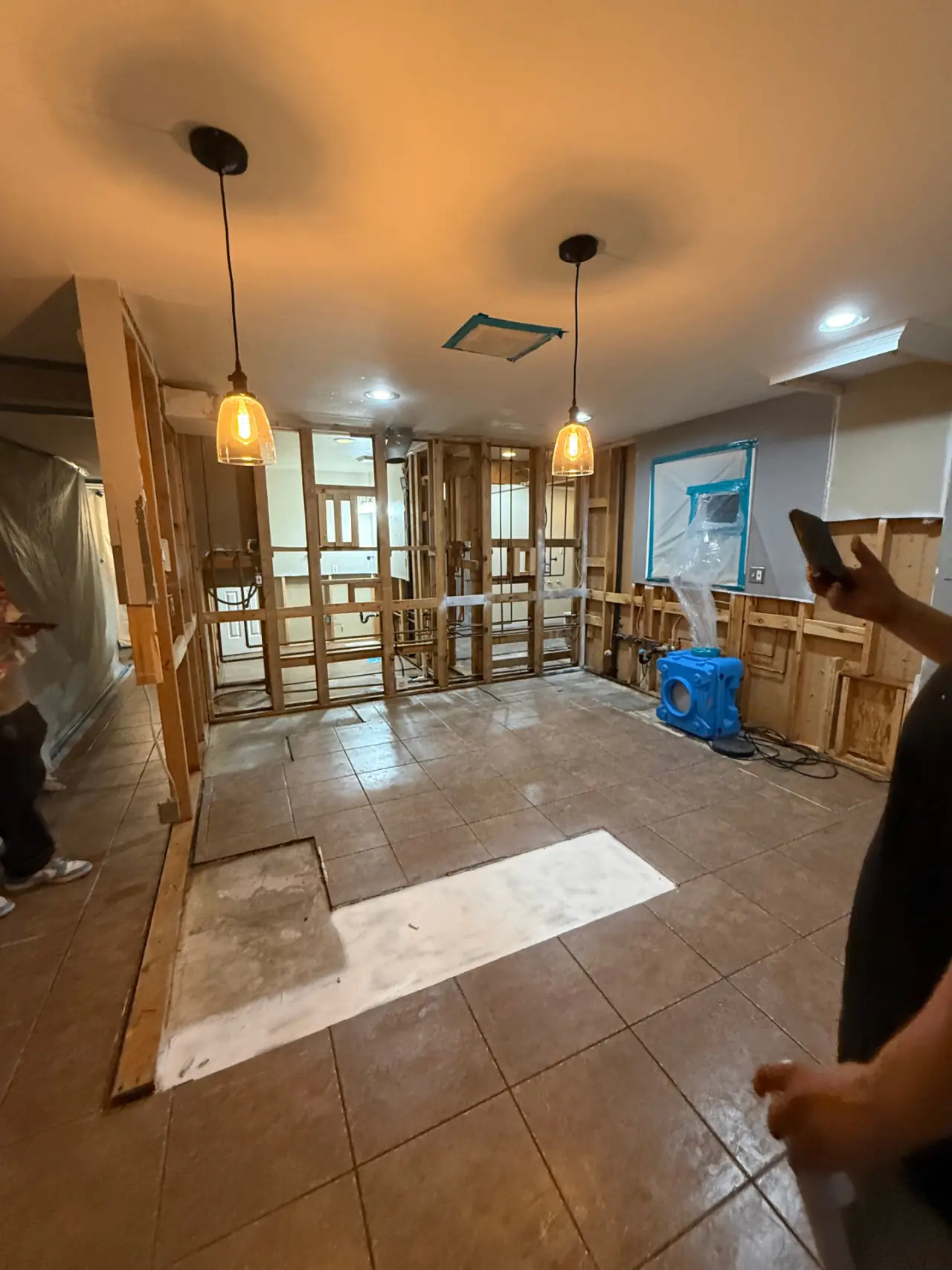
Water Mitigation in Phoenix
Moisture Mapping and Structural Drying for Phoenix Properties
After extraction, whatever water remains inside drywall, framing, cabinets and concrete decides how the rest of the job goes. Triology Restorations provides water mitigation in Phoenix that measures that moisture, dries it out and records every reading. Call 480-772-0058 for a free inspection.
- Readings taken and logged on every visit
- Free inspection anywhere in the city
- Licensed by the Arizona ROC, #347115
- Homes, multifamily and commercial buildings
Services in Phoenix
What happened at your property?
- Water Damage RestorationExtraction, drying and restoration
- Emergency Water ExtractionStanding water removed fast
- Burst Pipe CleanupPipe, water heater and appliance leaks
- Flood Damage RestorationMonsoon and flood cleanup
- Ceiling Water DamageLeaks through the ceiling, dried and restored
- Water Mitigation and DryingMoisture mapping and structural drying
- Mold RemediationContainment, removal and the moisture source
- Fire and Smoke DamageSoot, smoke odor and firefighting water
- Commercial RestorationOffices and commercial properties
What Our Customers Say
Real reviews from homeowners and businesses across the greater Phoenix area.
Water Damage Mitigation in Phoenix Is a Measuring Job
Mitigation is everything that happens between the end of extraction and the start of putting materials back. Its goal is simple to state and slow to reach: bring wet building materials back to normal moisture levels before mold, swelling or delamination set in. Water damage mitigation in Phoenix follows the same science as anywhere else, but the city's building mix shapes how long it takes and what we watch for.
We do not judge dryness by touch or by how a room looks. A wall can feel dry on the paint side while the bottom plate behind it is still saturated. So we take readings with moisture meters and thermal cameras, write them on a map of the affected area, and repeat them on every visit. When the numbers reach the drying goal, the equipment comes out. Until then, it stays.
Any pooled water has to be removed before drying begins. Our Phoenix extraction page covers the pumps and extractors, and this page picks up where it ends.
Water extraction in PhoenixWhy Dry Phoenix Air Does Not Dry Your Walls
People are often surprised that a building in the desert needs days of drying equipment. Outdoor air in Phoenix is dry for much of the year, but the inside of a wall cavity, the space under a kitchen cabinet and the top of a concrete slab barely trade air with the room. Water trapped there stays trapped. Opening the windows mostly dries the surface you can see.
That gap between how a room feels and what the meters read is the reason hidden moisture can still lead to mold weeks after a leak, even here.
Not sure what you need?
Call and a live person will walk you through it, any hour, or request a free inspection.
How Structural Drying in Phoenix Works Day by Day
Most drying jobs run on a short daily cycle. The number of days depends on the materials, how long the water sat and how far it moved.
- Step 1
Map the Moisture
We find the edges of the wet area with meters and a thermal camera, including inside walls, under cabinets and across the slab, and record a starting reading for each spot.
- Step 2
Set Drying Goals
We read similar materials in a dry part of the building. Those numbers become the target for the wet ones.
- Step 3
Set the Equipment
Fans sweep the wet faces of walls and floors so water evaporates, while dehumidifiers capture that vapor before it settles somewhere else. A cavity that stays wet behind closed drywall gets a small opening or loses its baseboard.
- Step 4
Monitor and Adjust
We return to take new readings, move equipment toward the slowest areas and log the progress with photos.
- Step 5
Confirm Dry and Document
When readings match the drying goals, equipment leaves and you receive the full moisture log for your records and your adjuster.
Drying Challenges Across Phoenix Neighborhoods
Phoenix has 36 residential historic districts and a lot of newer housing too. Each kind of building dries differently.
Encanto-Palmcroft and F.Q. Story
These districts carry periods of significance from 1920 to 1952 and 1921 to 1942. Older wall assemblies and original millwork call for slower, gentler drying, with careful choices about what to open.
Medlock Place and Windsor Square
Homes dating from the 1910s through the 1950s often have layers of later updates, so a wet floor may hide more than one flooring layer that has to dry or come up.
Apartments and Condos
In a Phoenix apartment complex, one failed line can leave two or three stacked units needing equipment at the same time. We set equipment in each one and keep the manager updated.
Slab Homes After a Plumbing Failure
Most homes sit on a concrete slab, which holds water under tile and laminate long after the surface looks fine. A slab or supply line failure needs its own drying plan.
Water Damage Drying in Phoenix: What Comes Out and What Stays
Good water damage drying in Phoenix saves material wherever the readings say it can be saved. Drywall that got wet from clean water and was caught early often dries in place. Insulation that is soaked, swollen particleboard in cabinet bases and carpet pad usually do not, and keeping them only slows the job.
When water came from a contaminated source, the standard is stricter. Porous materials touched by sewage or outside floodwater are removed, and the remaining surfaces are cleaned before drying. That is what people usually mean when they search for water remediation in Phoenix: removing what cannot be saved, then drying and cleaning what can.
Often Dried in Place
- Framing and studs
- Concrete slabs
- Solid wood cabinets with dry interiors
- Drywall wet from a clean source for a short time
- Tile and stone surfaces
Ready for a free inspection?
We look at the damage, document it and explain the next steps before any work starts.
Living or Working Around Drying Equipment
Drying equipment runs day and night. A few habits help it work faster.
- Leave air movers and dehumidifiers running and plugged in
- Keep doors to the drying area closed when we ask
- Set the thermostat where we recommend
- Do not move equipment between rooms
- Keep kids and pets away from cords
- Call us if a breaker trips or a unit stops
We explain each piece of equipment when we set it so nothing feels like a mystery.
Records Your Adjuster Can Follow
Every reading we take goes into a dated log with photos of the meters and the equipment in place. Filing a claim? With your sign-off, the adjuster gets that log along with the moisture map and our written scope. Sending our bill to the carrier ourselves is possible when approved and applicable, and the carrier alone settles coverage and the deductible.
Mitigation is one stage of the larger Phoenix water damage process, which also covers removal of damaged materials and the final steps once everything reads dry.
Water damage restoration in PhoenixRelated Help in Phoenix
Drying connects to the rest of the work.
Common Questions
Still have a question? Ask us directly.
24/7 Emergency Response
Property Damage Cannot Always Wait Until Tomorrow
Call Triology Restorations for responsive residential and commercial restoration services throughout the Phoenix Valley.
Available 24/7 for emergency calls.
Request an Inspection in Phoenix
Tell us what happened and a member of the Triology Restorations team will contact you.
Call 480-772-0058