
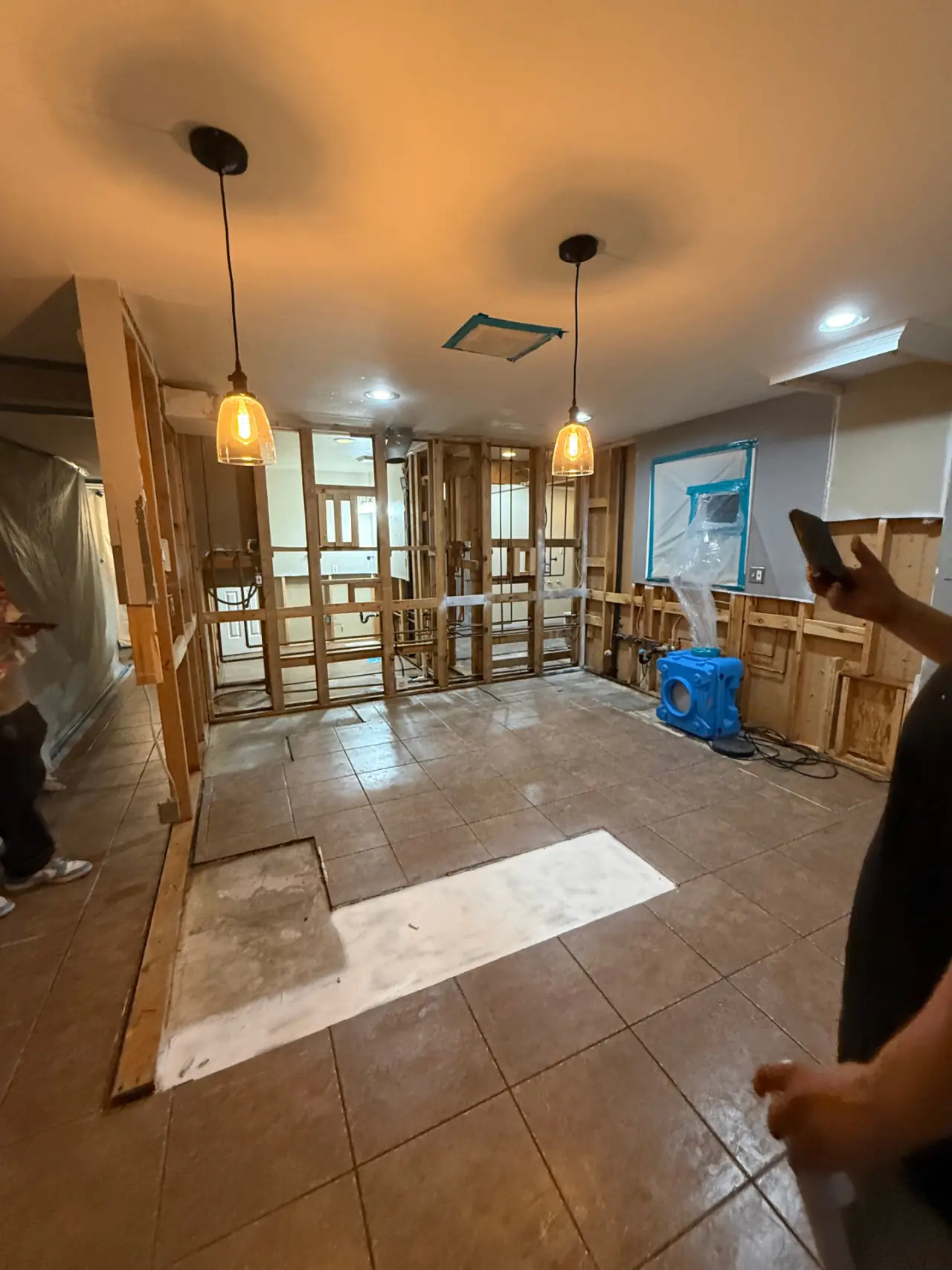
Tempe Water Mitigation
Drying Tempe Homes and Apartment Buildings Until the Readings Say Dry
After the standing water is gone, moisture is still sitting in drywall, cabinets, framing and the concrete slab. Our team maps it, sets drying equipment and comes back to measure it until every material reaches its drying goal. Phone 480-772-0058 any time to set up a free inspection.
- Readings logged on every visit
- Free inspection to start
- Licensed with the Arizona ROC, #347115
- Single-family, multifamily and commercial
Services in Tempe
What happened at your property?
- Water Damage RestorationExtraction, drying and restoration
- Emergency Water ExtractionStanding water removed fast
- Burst Pipe CleanupPipe, water heater and appliance leaks
- Flood Damage RestorationMonsoon and flood cleanup
- Ceiling Water DamageLeaks through the ceiling, dried and restored
- Water Mitigation and DryingMoisture mapping and structural drying
- Mold RemediationContainment, removal and the moisture source
- Fire and Smoke DamageSoot, smoke odor and firefighting water
- Commercial RestorationOffices and commercial properties
What Our Customers Say
Real reviews from homeowners and businesses across the greater Phoenix area.
What Water Mitigation in Tempe Covers
Mitigation is the part of a water job most people never see. The visible water has been pumped and extracted, the floor looks better, and yet the bottom two feet of drywall, the cabinet toe kicks and the slab under the flooring can still be holding a lot of water. Left alone, that hidden moisture can warp materials and give mold a place to start.
Our water mitigation in Tempe is the controlled drying that follows extraction. We measure where the moisture is, set air movers and dehumidifiers to pull it out, and return to take new readings until each material reaches its drying goal. Then, and only then, decisions about putting the space back together can be made with confidence.
Got a puddle or soaked carpet right now? Start with the extraction page.
Water extraction in TempeStructural Drying in Tempe, From First Reading to Last
Drying runs on numbers, not on how a wall looks or feels. Here is the order we follow on a Tempe job.
- Step 1
Map the Moisture
Meters and thermal imaging trace the path water took through wall cavities, beneath cabinets and over the concrete. We sketch a moisture map room by room, and unit by unit in a shared building.
- Step 2
Set a Dry Standard
We read an unaffected wall or floor in the same building to learn what dry looks like for those materials. That becomes the goal for every wet one.
- Step 3
Open What Has to Be Opened
Baseboard may come off, small holes may go into a wall cavity, and toe kicks may be pulled so air can reach trapped water. Materials that cannot dry, or that took on dirty water, are removed and recorded.
- Step 4
Place Air Movers and Dehumidifiers
Air movers pull moisture out of surfaces into the room air, and dehumidifiers take it out of the air. Placement follows the moisture map, not a fixed count per room.
- Step 5
Return and Re-Read Every Day
Each visit we take new readings at the same marked points, adjust or move equipment and log the numbers. Drying usually takes a few days, and the readings decide when it is done.
- Step 6
Confirm Dry and Hand Over the Log
When every point meets the goal, the equipment comes out and the full log goes to the owner, the manager and, if authorized, the adjuster.
Not sure what you need?
Call and a live person will walk you through it, any hour, or request a free inspection.
Desert Air Versus a Wet Wall in Tempe
A common assumption in a desert town: leave the room open and the dry air will finish the job. Outdoor air is dry most of the year, but it does not reach the inside of a wall cavity, a sealed cabinet base or the concrete under vinyl plank. Those spaces trap moisture and give it very little way out. Opening a window can even pull dust and heat into a room without touching the water inside the wall.
A slab is a good example. Much of Tempe was built slab-on-grade, and concrete absorbs water and releases it slowly. Flooring laid over a wet slab can look fine for weeks. Water damage drying in Tempe means reading the slab directly and drying it before new flooring goes down.
Places moisture hides after a leak
- Inside walls behind baseboard
- Under kitchen and vanity cabinets
- Concrete slab under carpet or plank
- Insulation in a ceiling cavity
- Shared walls between apartment units
Water Damage Mitigation in Tempe Buildings With Shared Walls
Tempe's housing makes drying a group project more often than in neighboring cities. Renters occupy about 57.7 percent of the city's homes, and buildings with five or more units hold about 41.8 percent of its housing. Here is how that plays out on a drying job.
Two Sides of One Wall
A wall shared by two units is wet on both faces after a leak. We need access to both apartments to dry it, and we coordinate that through the manager.
Ceiling Cavities Between Floors
Water that drops from an upstairs unit can sit in the ceiling of the one below. Drying that space often means opening part of the ceiling.
Tenants Living Around the Equipment
Plenty of tenants keep living in the unit while it dries. Equipment goes where it keeps doors, beds and kitchens usable and explain the noise and power draw ahead of time.
Records for Owners and Insurers
Daily readings by unit give landlords and adjusters a clear record of which spaces were wet, for how long and when they reached dry.
Drying Older Tempe Homes and Post-War Neighborhoods
The census puts about 41.2 percent of Tempe's housing units in buildings from before 1980, and about 63.1 percent from before 1990. Many of the oldest sit in post-war subdivisions such as University Park, Tomlinson Estates, Date Palm Manor and Broadmor Manor, built in the late 1940s and 1950s. Homes of that age have often been updated in layers, with new flooring laid over old and cabinets swapped by one owner after another.
Those layers matter for drying. Water can get trapped between an old floor and a new one, or behind a cabinet that was set over an older wall. We read each layer and open only what the readings call for. Some of these neighborhoods also receive scheduled SRP flood irrigation, and we note the schedule so a reading near an irrigated yard is read in context.
Water damage restoration in TempeReady for a free inspection?
We look at the damage, document it and explain the next steps before any work starts.
Water Remediation in Tempe: What You Can Expect During Drying
A few practical points help the drying go smoothly in a home or rental.
- Equipment runs around the clock until readings are on target
- Air movers are loud, so plan for sleep and work calls
- Keep windows and doors closed unless we say otherwise
- Do not turn off dehumidifiers to save power
- Leave baseboards and opened cavities as we left them
- Tell us if any new water, stain or smell shows up
If the power goes out, call us. After the October 13, 2025 microburst, about 22,000 people in Tempe lost power, and drying equipment stops when the outlets do.
When the Water Came From a Pipe or Heater
Many of the drying jobs we run in Tempe start with a failed supply line, a water heater or an appliance hose. The plumber stops the leak, and our job is to clean up and dry what it soaked. The cleanup side of those jobs has its own page.
Burst pipe cleanup in TempeBook a Free Drying Inspection in Tempe
Tell us when the water happened, how it was cleaned up and whether anyone has taken readings yet. If the leak is older than a day or two, we will want to measure before anything is covered or rebuilt.
With a claim open, we send the moisture log and photos to your adjuster after you give the go-ahead. Your carrier rules on coverage and approval.
Schedule a free inspectionCommon Questions
Still have a question? Ask us directly.
24/7 Emergency Response
Property Damage Cannot Always Wait Until Tomorrow
Call Triology Restorations for responsive residential and commercial restoration services throughout the Phoenix Valley.
Available 24/7 for emergency calls.
Request an Inspection in Tempe
Tell us what happened and a member of the Triology Restorations team will contact you.
Call 480-772-0058