
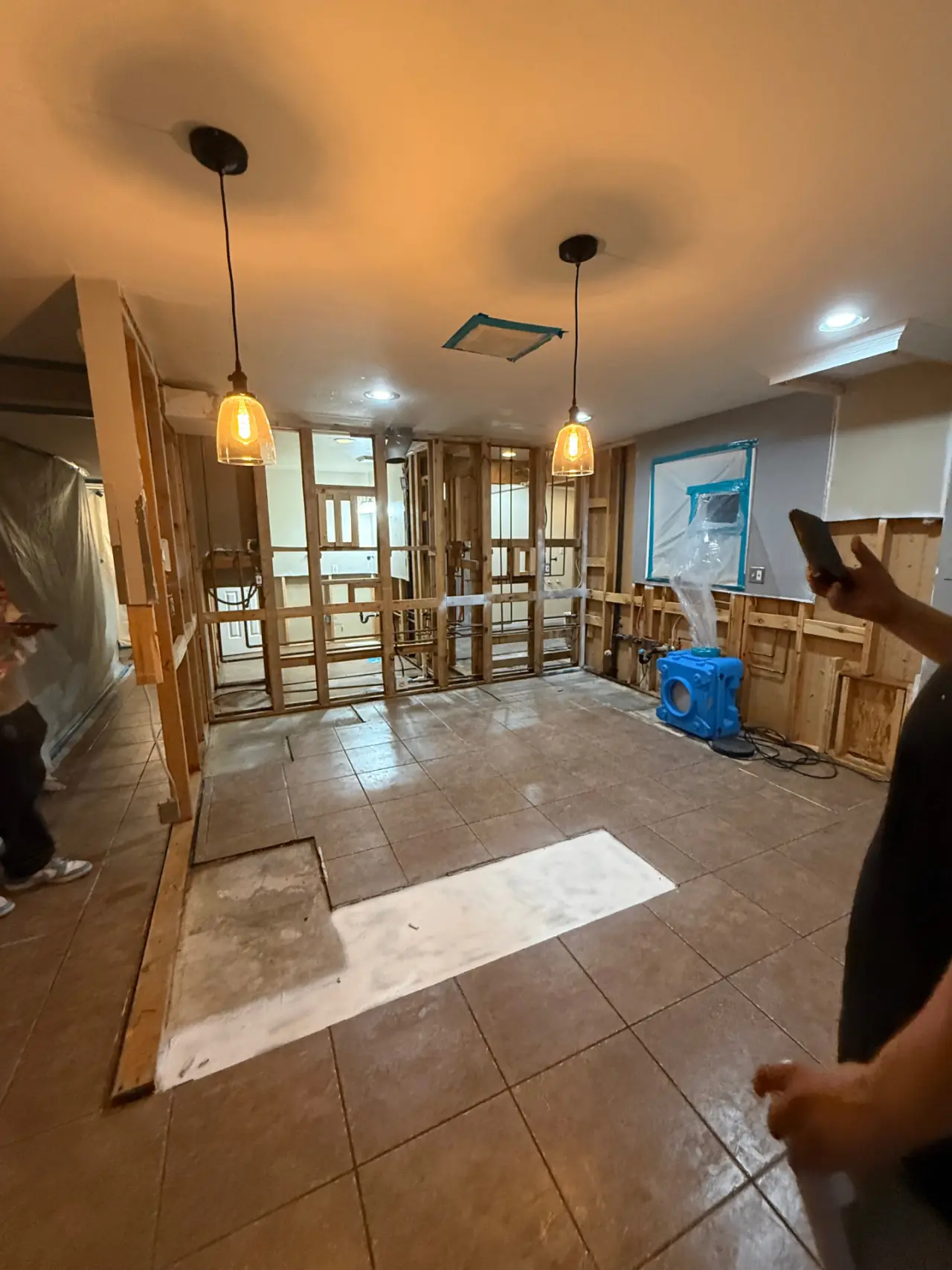
Ceiling water damage restoration
How We Repair a Ceiling After Water Damage, From the Leak to the Finished Surface
Water damage on a ceiling is rarely just a stain, because the wet drywall and insulation above it keep holding moisture long after the drip stops. Triology Restorations traces where the water came from, dries the space above the ceiling, removes materials that cannot be saved and then restores the ceiling itself. Our team answers 24/7 across the Phoenix Valley, and restoring the ceiling is the final step of fixing the water damage behind it.
- We find the water source and check moisture above the ceiling
- Wet drywall and insulation are dried or removed, then the ceiling is restored
- Calls answered live around the clock, with a free inspection
- Licensed Arizona ROC contractor, license #347115
What Our Customers Say
Real reviews from homeowners and businesses across the greater Phoenix area.
What a Water Stain on the Ceiling Really Means
A ceiling is the bottom layer of a hidden space. Above the paint and drywall there is insulation, framing and often ductwork, wiring or a drain line, and water spreads through all of it before it shows up as a water stain on the ceiling. That is why a quick coat of paint over a brown patch rarely ends the problem. The wet material underneath is still there, and it can keep softening the drywall and feeding mold.
Our work covers the whole chain. We look for where the water came from, take moisture readings above and around the affected area, dry the cavity, take out drywall and insulation that cannot be saved, check for mold and then restore the ceiling so the room is finished again. The repair is the final step of fixing the water damage, not a separate service on its own.
A roof leak is fixed by a roofer, and a failed pipe or fitting is fixed by a plumber. We do not replace roofs or repair plumbing. We handle the water damage that the leak left behind and the ceiling that has to be restored afterward, and we work in step with the trades who stop the source.
See our full water damage restoration serviceWhere a Water Leak in the Ceiling Comes From
Almost every wet ceiling traces back to one of a few sources, and finding the right one decides what has to be dried.
Roof Leaks in Monsoon Storms
Monsoon season brings sudden heavy rain and wind-driven water that finds weak spots in flashing, tile and low-slope roofs. The water soaks the attic insulation first and then stains the ceiling below.
AC Condensate Overflow
Heavy summer cooling pushes a lot of condensate through the drain line and attic drain pan. When the line clogs or the pan fills, the overflow soaks the ceiling beneath the air handler.
Upstairs Bathroom Leaks
A failed shower pan, tub drain or toilet seal sends water down through the floor structure. In two-story homes the first sign is often a damp patch in the room below.
Laundry and Supply Lines
Washing machine hoses and supply lines wear out over time, and hard water speeds that wear. A slow leak inside a wall or floor can wet a ceiling for weeks.
Water Heater in the Attic
Some homes place the water heater in the attic, where a leaking tank or fitting drips onto insulation and drywall. These leaks often run unseen until the ceiling gives way.
Slow Hidden Drips
A pinhole in a supply line or a worn drain fitting can drip for a long time. The damage builds slowly, and the first visible sign may be a faded ring that keeps growing.
Not sure what you need?
Call and a live person will walk you through it, any hour, or request a free inspection.
Signs of Leakage on the Ceiling, From Water Stains to Sagging
A water stain on the ceiling is the most familiar warning, but it is not the only one. These signs mean water is, or recently was, in the ceiling.
- Brown, yellow or tan stains, often with a darker ring at the edge
- A sagging, bowed or drooping section of ceiling
- Bubbling, peeling or blistered paint
- Water dripping from a light fixture, vent or ceiling fan
- A musty smell in a room, closet or hallway with no clear cause
- Drywall that feels soft, damp or crumbly to the touch
- Stains that return after being painted over
Leakage on the ceiling that stops on its own has not necessarily dried. Call us and we can check the moisture levels.
Safety First When a Ceiling Is Sagging or Dripping
A sagging ceiling can be holding a large amount of water, and it can come down without warning. Stay out from under it and keep children and pets out of the room. If you can do so safely, place a bucket below any drip and move furniture and valuables out of the way.
If water is coming through a light fixture or fan, turn off the power to that circuit at the breaker, but only if you can reach the panel without standing in water. Do not poke the bulge to drain it. Call us, and we will tell you what to do next while we get to your property.
Read about flood damage restoration after stormsHow We Handle Water Damage Ceiling Repair Step by Step
Every ceiling job follows the same order, because skipping ahead to the finish is how moisture gets sealed in.
- Step 1
Find the Source and Map the Moisture
We trace the stain back to its origin and use moisture meters to measure the ceiling, the walls around it and the space above. Moisture often reaches farther than the visible mark.
- Step 2
Dry the Cavity and Insulation
Where materials can be saved, we dry them with air movers and dehumidification, and we monitor readings until they come down. Insulation that stays wet loses its value and holds water against the drywall.
- Step 3
Remove Wet Drywall and Insulation
Drywall that has softened, stained through or lost its shape is removed, along with insulation that cannot be dried. Opening the ceiling lets us see the framing and reach the damp spots directly.
- Step 4
Check for Mold and Treat the Area
Before anything is closed up, we inspect the exposed cavity for mold growth. If we find it, we contain the area and remove it, then address the moisture that let it grow.
- Step 5
Restore the Ceiling
Once the structure is dry and the source has been fixed by the right trade, we hang new drywall, tape, texture to match the surrounding ceiling and paint the repaired area. The goal is a ceiling that looks like the water never reached it.
- Step 6
Document the Work
We photograph the damage, record moisture readings and write down what was removed and why. That record helps if you are working with an insurance carrier.
Ready for a free inspection?
We look at the damage, document it and explain the next steps before any work starts.
Drywall Water Damage and Mold Above the Ceiling
Not every wet ceiling has to come out. Drywall that is only damp, still firm and not stained through can often be dried in place, which keeps the repair small. Drywall water damage is different once the board is soft, sagging or crumbling, because it will not hold its shape or take paint, and it stays wet longer than the framing around it. We use readings, not guesswork, to tell the two apart.
Dry outdoor air in Arizona does not dry out the space above a ceiling. The attic and wall cavities stay closed, so hidden moisture can sit there and lead to mold even in a dry climate. Mold can affect indoor air quality, and anyone in the home with sensitivities should talk to a doctor. When we open a ceiling, we look at the back of the drywall and the insulation for growth before the new board goes up.
Learn how we handle mold remediationCeiling Leak Repair and Insurance Claims
A sudden leak from a burst pipe or storm may be covered by a homeowner or commercial policy, but the carrier decides coverage, deductibles and approval. We never promise coverage or the outcome of a claim.
What we can do, when you authorize it, is photograph and document the ceiling damage, take moisture readings, prepare a restoration scope and communicate with your adjuster. Direct billing is offered when approved and applicable. For ceiling leak repair that follows a covered loss, that paperwork is often what the claim needs.
How we help with insurance claimsService Areas
Ceiling Water Damage by City
24/7 Emergency Response
Property Damage Cannot Always Wait Until Tomorrow
Call Triology Restorations for responsive residential and commercial restoration services throughout the Phoenix Valley.
Available 24/7 for emergency calls.
Request an Inspection
Tell us what happened and a member of the Triology Restorations team will contact you.
Call 480-772-0058