
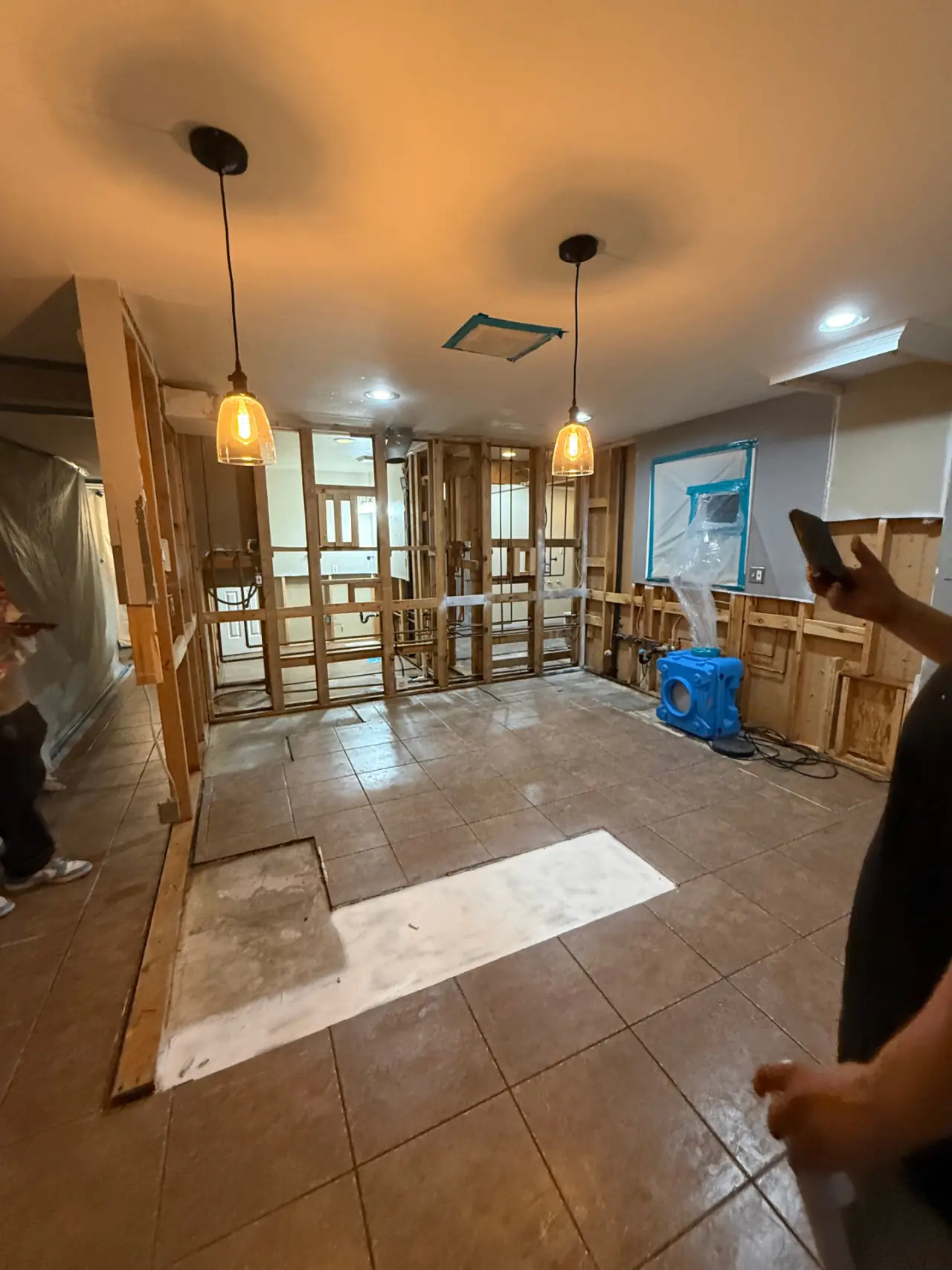
Leak Detection in Phoenix
Tracking Down Water Hidden in Phoenix Walls and Ceilings
When a wall stays damp, a ceiling keeps staining or the water bill climbs for no clear reason, water is usually moving somewhere you cannot see. Triology Restorations looks for leaks inside walls and ceilings in Phoenix homes, apartments and offices, maps how far the water has spread and tells you who should fix the source. Call 480-772-0058 at any hour.
- Phone answered by a person at any hour
- Free inspection of the problem area
- Licensed, bonded and insured, ROC #347115
- Residential and commercial properties
Services in Phoenix
What happened at your property?
- Water Damage RestorationExtraction, drying and restoration
- Emergency Water ExtractionStanding water removed fast
- Burst Pipe CleanupPipe, water heater and appliance leaks
- Leak DetectionHidden leaks in walls and ceilings found
- Flood Damage RestorationMonsoon and flood cleanup
- Ceiling Water DamageLeaks through the ceiling, dried and restored
- Water Mitigation and DryingMoisture mapping and structural drying
- Mold RemediationContainment, removal and the moisture source
- Fire and Smoke DamageSoot, smoke odor and firefighting water
- Commercial RestorationOffices and commercial properties
What Our Customers Say
Real reviews from homeowners and businesses across the greater Phoenix area.
Leak Detection in Phoenix, and Where Our Work Stops
Phoenix is the largest city in Arizona, with 653,065 housing units that range from historic districts whose stories begin in the 1880s to subdivisions finished in the last few years. Each era hides water in its own way. Our leak detection service is built for one specific problem across all of them: water escaping inside a wall or above a ceiling, where it soaks drywall, insulation and framing long before anyone sees a drip.
Some leaks are not ours to find. A leak under the concrete slab, a pool or spa that keeps losing water and a broken irrigation line all belong to a licensed plumber or the right specialist, and so does every pipe repair. A few of the older central neighborhoods still water their yards by flood irrigation, and problems from that system are outside what we trace as well. What we do is locate the leak hiding in your walls or ceilings, show you the evidence, and take care of the water damage once the source has been fixed.
About water leak detection across the ValleyWhere Hidden Leaks Turn Up in Phoenix Buildings
The source decides who fixes it. These are the places inside walls and ceilings where we trace water most often around the city.
Behind Showers and Tubs
Valve bodies, shower arms and drain connections sit inside the wall. A slow seep there shows up as loose tile, peeling paint on the far side of the wall or a soft baseboard.
Ceilings Under Second-Floor Baths
When a toilet supply, washer box or drain joint fails on a second floor or in the condo above, the first evidence is usually in the ceiling underneath.
Kitchen Walls and Sink Bases
Supply lines to the faucet, dishwasher and ice maker run behind cabinets, so water often reaches the cabinet floor and the wall behind it before it reaches the room.
Water Heater and AC Closets
A weeping tank fitting or condensate line in an interior closet can wet the wall it shares with a bedroom or hallway, and the stain appears on the other side.
Attic Lines and Drain Pans
Air handlers in Phoenix attics work for much of the year. An overflowing pan or a cracked condensate line drips onto the back of the ceiling drywall, sometimes for days.
Exterior Walls After a Monsoon
Wind-driven rain gets in around windows, parapets and roof edges and runs down inside the wall. Sky Harbor's 1.64 inches on September 26, 2025, the heaviest single day of rain the city had seen since 2018, is the kind of storm that should prompt a look at exterior walls.
Not sure what you need?
Call and a live person will walk you through it, any hour, or request a free inspection.
How Water Leak Detection in Phoenix Works
A leak investigation is careful work, not guesswork. This is the order we follow on every Phoenix call, from a one-bedroom apartment to a suite of offices.
- Step 1
Start With What You Noticed
We ask what you have seen, smelled or heard, when it began, and whether it changes with weather, AC use or a particular fixture. That history often points to the right wall before we even arrive.
- Step 2
Inspect the Room and Its Neighbors
We look at the affected area and everything that shares a wall, floor or ceiling with it: the bathroom on the other side, the closet behind it, the unit above and the attic where it is reachable.
- Step 3
Read Moisture in Walls, Ceilings and Floors
We take moisture readings on drywall, trim, floors and cabinet bases to separate surfaces that are wet today from ones carrying an old stain. Dry readings nearby give us a baseline to compare against.
- Step 4
Map How Far the Water Went
We record the readings on a moisture map. Water runs downhill and along framing, so the wettest point and the visible stain are not always in the same place.
- Step 5
Narrow Down the Source
The shape of the map, the layout of the plumbing, AC and roof above it, and your history together tell us where the leak most likely starts. If confirming it needs a small opening, we explain why and ask first.
- Step 6
Hand You the Findings
You get photos, readings and a plain summary of what we found, plus who should repair the source. Once that repair is made, we can start on the water damage.
Older Central Phoenix Homes and Leaks in Aging Walls
A large share of Phoenix housing has been standing a long time. Census figures show 22.9 percent of the city's units predate 1970, and 41.6 percent predate 1980. Two central ZIP codes, 85006 and 85007, have roughly three-quarters of their housing units dating from before 1980.
Phoenix also has 36 residential historic districts. Near downtown, the Roosevelt, Garfield and Woodland districts trace their significance to the late 1800s, and districts such as Coronado, Windsor Square and Medlock Place carry that history into the early and middle 1900s. Homes of that age commonly have galvanized pipe on the supply side and cast iron on the drain side, and walls that old have often been opened and patched over the years. In a house like that, a leak can show up as a stain several feet from its source, or as damp at the bottom of a wall where an old drain joint sits, so we read the whole wall, not just the stained patch.
Arcadia, between 44th and 68th streets below Camelback Mountain, is a different kind of old. The neighborhood's ranch houses go back to the early 1950s, and a 1990 count found 41 percent of Arcadia Camelback homes were built between 1950 and 1959. In a single-story ranch, hidden water tends to come from one of three places: the roof, the AC equipment in the attic or the plumbing wall behind a bathroom. Our Phoenix service area page lists everything else we handle across the city.
All restoration services in PhoenixHard Water and Newer Phoenix Neighborhoods
Age is not the only factor. Phoenix tap water measures 10 to 17.6 grains per gallon of hardness (172 to 302 ppm), according to the city's 2025 Water Quality Report. The city calls that an aesthetic matter rather than a health one, but calcium and magnesium leave deposits, and over time scale collects in shower valves, supply stops and the fittings behind sinks and appliances. Those fittings live inside walls and cabinets, which is why a leak caused by hard water is so often a hidden one.
Newer parts of the city have their own patterns. Ahwatukee Foothills, south of South Mountain Park, grew out of the master-planned community Presley Development Company began in 1971, and the citywide median build year is 1985. In a two-story home of that generation, a slow leak from an upstairs bathroom or laundry room usually reveals itself in the ceiling or wall below before anyone upstairs notices a thing.
Where hard water wears first
- Shower and tub valve bodies
- Angle stops under sinks and toilets
- Water heater connections
- Ice-maker and dishwasher supply fittings
- Washing machine valves in the wall box
Ready for a free inspection?
We look at the damage, document it and explain the next steps before any work starts.
Signs You May Need Leak Detection Services in Phoenix
Only 1.2 percent of Phoenix housing units sit empty for seasonal use, so most hidden leaks are spotted by the people living with them. Call if you notice:
- A wall stain or bubbled paint that keeps growing
- A musty odor in a hallway, closet or vanity
- Warped or soft baseboards along one wall
- Loose tile or cracked grout on a shower wall
- The sound of water moving when nothing is on
- A water bill that jumped without a reason
- Damp drywall near an AC closet or attic hatch
If water is actively dripping, close the fixture valve or the main shut-off first, then call us.
Leaks in Phoenix Apartments, Condos and Offices
In a building with shared walls, a hidden leak is rarely one owner's problem. About 15.9 percent of the city's homes sit in large buildings of 20 units or more, and the local apartment stock includes mid-century complexes such as the Park Lee Alice Apartments Historic District, built from 1955 to 1966. Water from one unit's shower or kitchen can travel into the wall or ceiling of the unit beside or below it.
Commercial space follows the same logic. Offices and shops along the Camelback Corridor near 24th Street and Camelback Road, and around the 44th Street and Van Buren core near Sky Harbor, place restrooms and break rooms against tenant walls. We coordinate access through the property manager, read every affected space and keep the findings organized by unit or suite. Larger commercial losses have their own Phoenix page.
Commercial restoration in PhoenixWho Takes Over Once We Find the Phoenix Leak
Our part of the leak work ends at the source. The next call depends on what we found.
A Plumber Repairs the Pipe
Pipe repairs, slab leaks, pool and spa leaks and irrigation lines are a licensed plumber's work. We pass along our moisture map so they know where we found water.
A Roofer or HVAC Technician
A roof seam or a clogged condensate line gets fixed by its own trade before drying begins, or the same area simply gets wet again.
Burst Pipe Cleanup in Phoenix
If a failed line soaked the floor and lower walls, our crew handles the cleanup after the plumber's fix.
Ceiling Water Damage in Phoenix
Wet drywall and insulation overhead come out, the cavity is dried, and the ceiling is closed once readings show it is dry.
Water Mitigation in Phoenix
We set air movers and dehumidifiers on wall cavities, cabinets and framing and check readings every day until each spot hits its goal.
Water Damage Restoration in Phoenix
Larger losses handled start to finish, from extraction and drying through the paperwork for your claim.
Reach a Leak Detection Company in Phoenix Any Hour
Phone 480-772-0058 and describe where you see the stain, smell or drip. We will set up a free inspection, take readings and walk you through the results without jargon.
If insurance may be involved, we photograph and document the damage, and with your okay we will send those records to your adjuster. Your carrier is the one who decides coverage and approval.
Send us a message24/7 Emergency Response
Property Damage Cannot Always Wait Until Tomorrow
Call Triology Restorations for responsive residential and commercial restoration services throughout the Phoenix Valley.
Available 24/7 for emergency calls.
Request an Inspection in Phoenix
Tell us what happened and a member of the Triology Restorations team will contact you.
Call 480-772-0058