24/7 Emergency Line
Dealing with damage right now?
Live answer, 24 hours a day, no call centers. The longer water sits, the more damage it can cause.
Call 480-772-0058 Request a free inspection- Licensed, bonded and insured
- Homes and businesses, Phoenix Valley
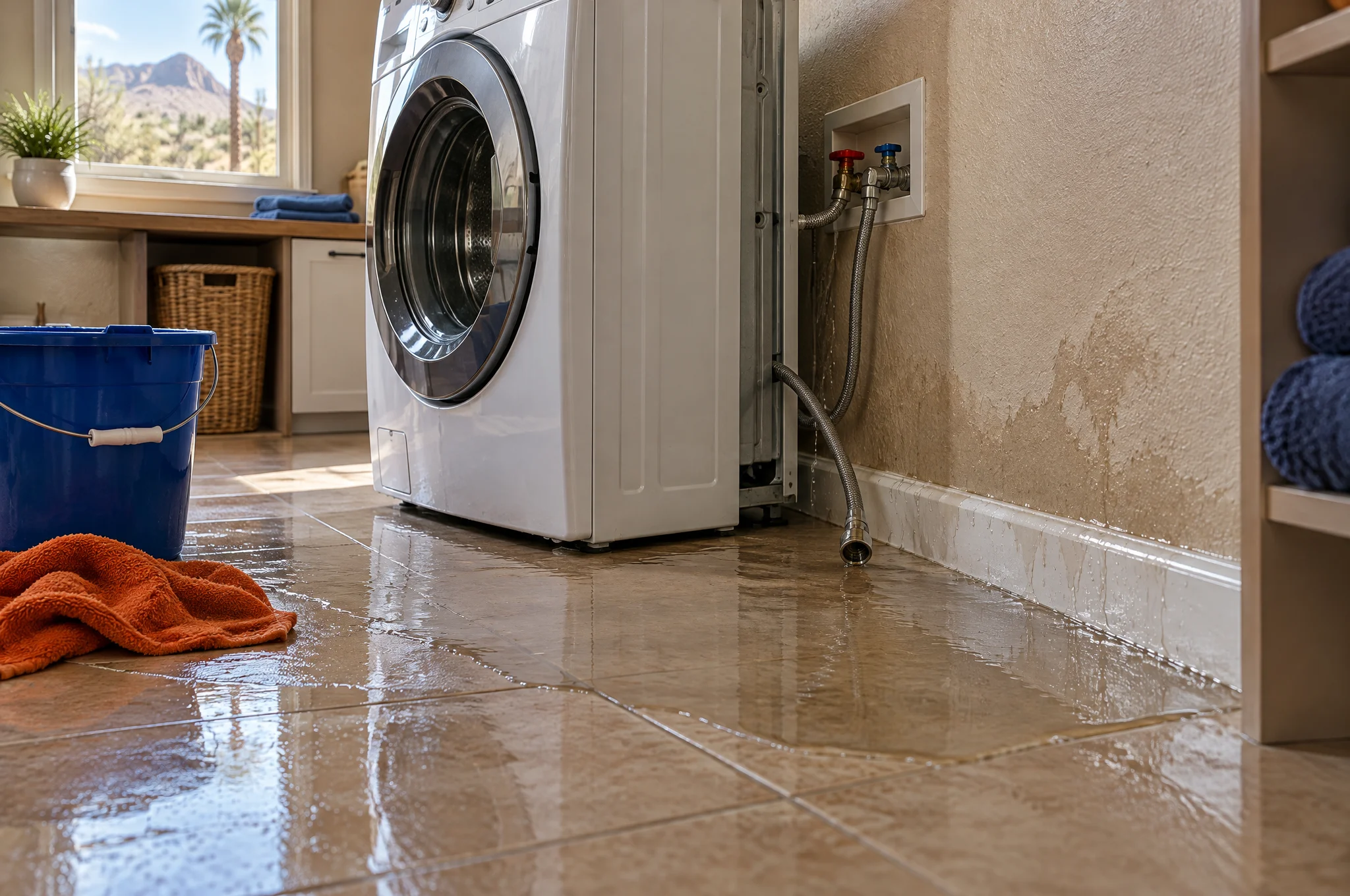
A musty smell after a water leak usually means something in the home is still wet, even when nothing looks damaged. The odor comes from moisture trapped in drywall, insulation, or flooring. Fixing it means finding that moisture and drying it, which is the job of Water Mitigation and Structural Drying.
Why Does My House Have a Musty Smell After a Water Leak?
Water that soaks into building materials stays there after the surface looks dry. Drywall, insulation, wood framing and carpet pad absorb moisture and hold it for days. Mildew (a surface mold that grows on damp materials) and bacteria thrive in warm, damp environments like these, and they give off gases that your nose reads as a musty odor.
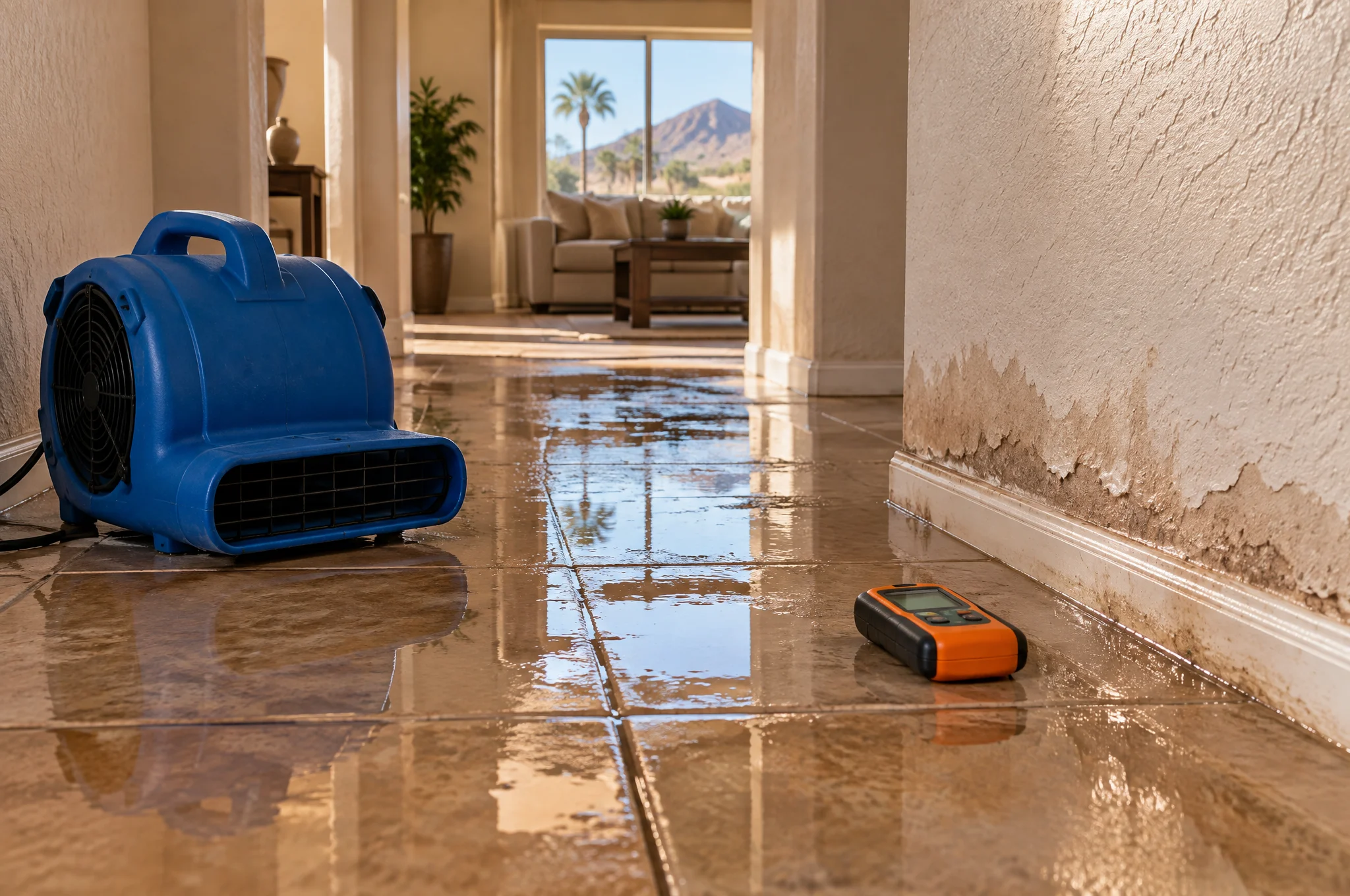
That is why a musty smell after a water leak points to moisture you have not found yet. Phoenix Valley homes hide it well. Dry desert air dries surfaces such as paint and stucco quickly, but the paper facing, insulation and framing behind them can stay wet. The room looks fine. The smell tells you it is not.
Why Is There a Musty Smell but No Visible Mold?
A musty smell but no visible mold is common, and it usually means the growth is out of sight. Mold growth and mildew start behind baseboards, under carpet pad, inside wall cavities and above ceilings. The odor travels farther than the growth does, because air moves through gaps around outlets, plumbing and the HVAC system.
A smell with no visible source calls for an inspection, not a wait-and-see week. If the inspection finds growth, mold remediation (removing mold growth from a home) is a later step, and it only works once the moisture source is fixed and dry. An air freshener covers odors without drying anything.
Where a Musty Odor Hides After Water Damage
A musty smell after water damage nearly always has a location, and where you notice it points to what is wet.
| Where you smell it | Likely source | What to check |
|---|---|---|
| Low along a wall | Wet drywall or insulation behind the surface | Moisture meter readings along the baseboard |
| Carpets and rugs | Soaked pad under the carpet | Press the carpet, then check the pad and edges |
| Tile floors and cabinet bases | Water under the tile or in the cabinet floor | Grout lines, toe kicks, cabinet backs |
| Air vents | Damp ducts or a clogged A/C condensate line | The drain pan and drain line at the air handler |
| Ceiling or attic | A roof or pipe leak soaking insulation | Stains, sagging drywall, damp attic insulation |
Do not skip content such as cardboard boxes, rugs and upholstered chairs. They absorb moisture and keep the odor going after the structure dries.
Carpet Smells After Getting Wet: Can It Be Saved?
When carpet smells after getting wet, the pad underneath is usually the cause. Carpets dry on top first, while the foam pad works like a sponge below. Clean water caught early can often be dried in place. Water that sat for days, or came from a dirty source, usually means the pad comes out and the carpet may go with it.
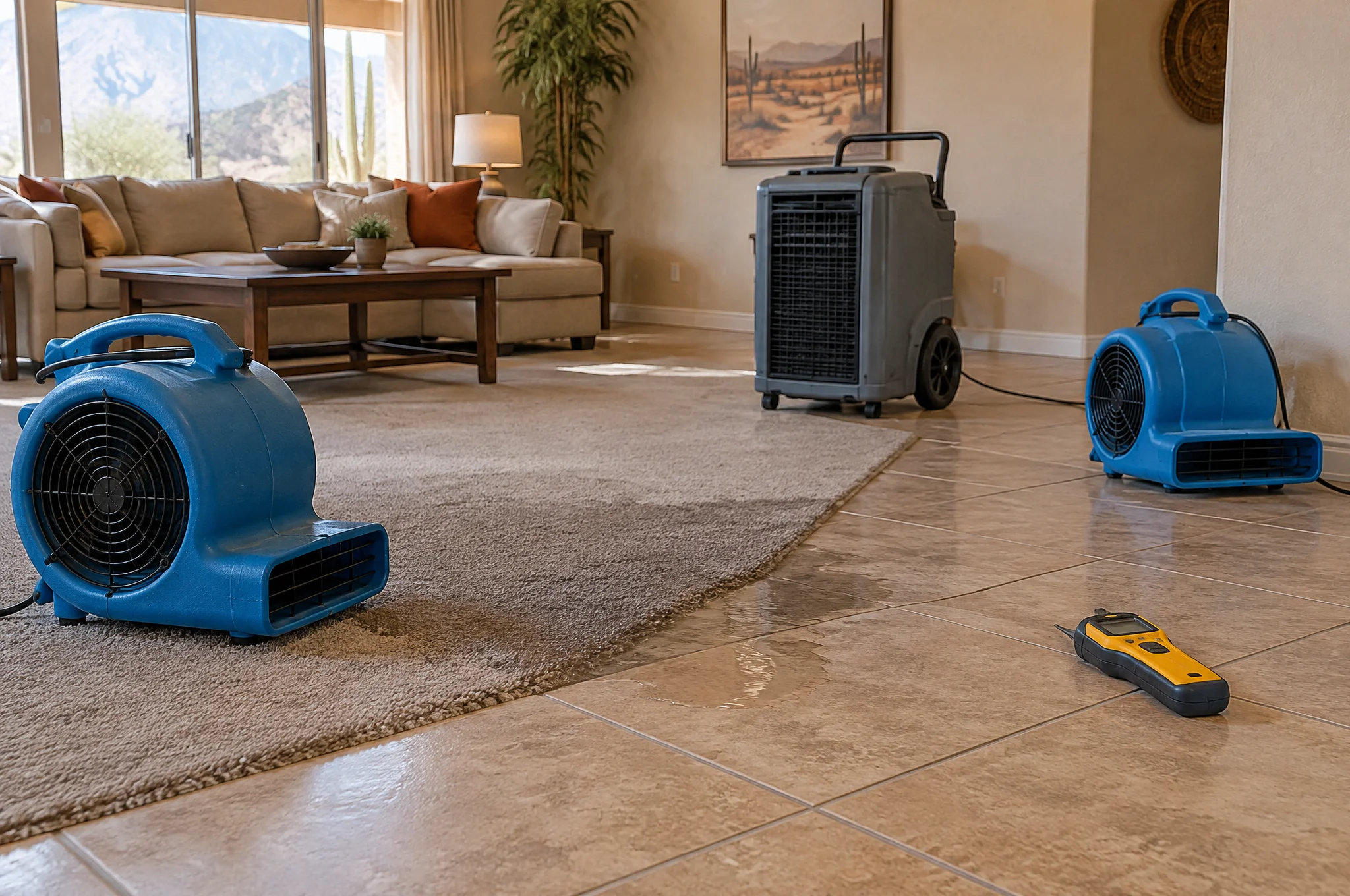
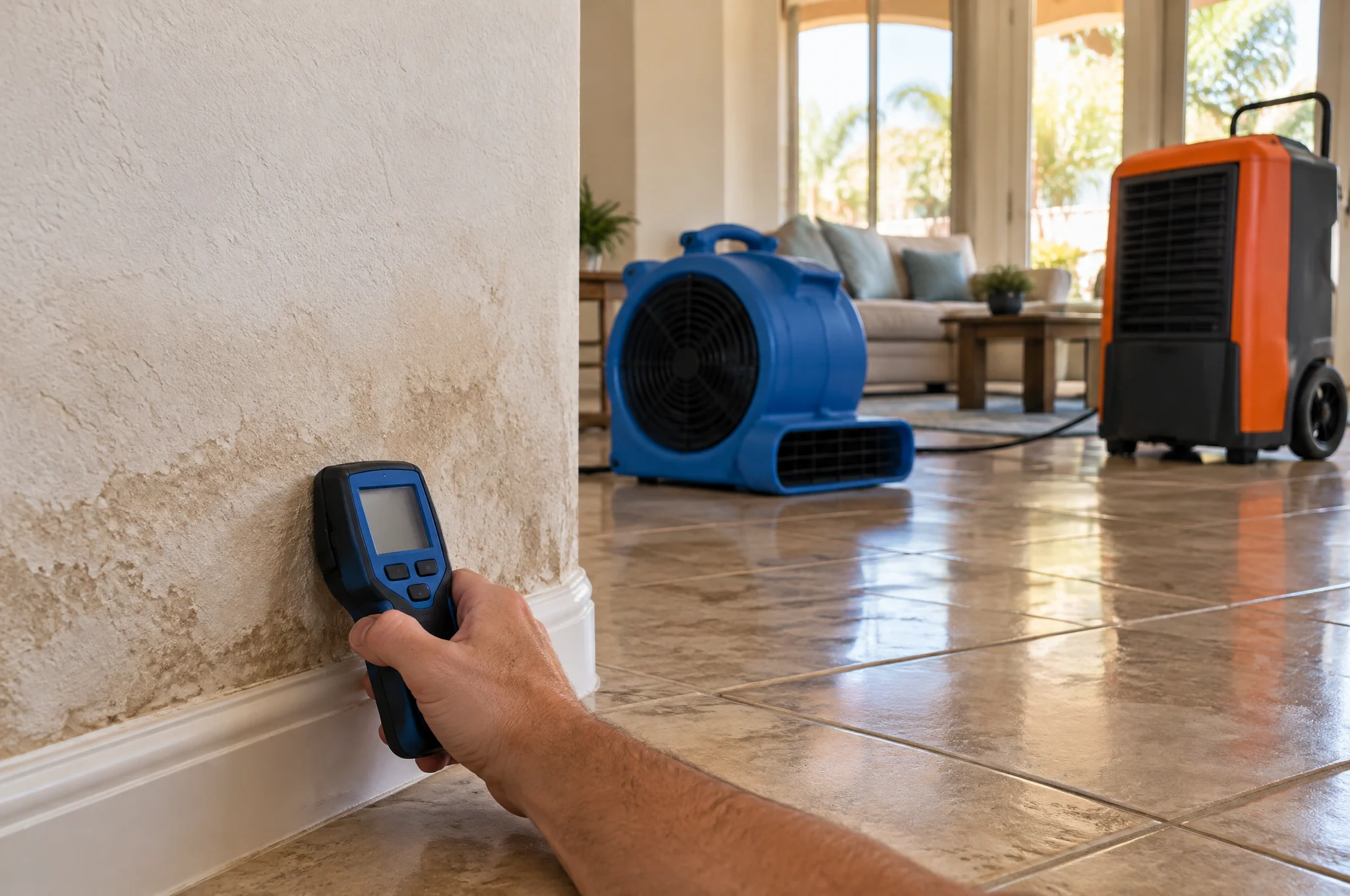
Triology's technicians check carpets with a moisture meter, then set air movers and dehumidifiers to dry what can be saved. Hard floors get the same check. Water slips under tile into the subfloor, and wood floors can cup (curl at the edges) as they take on moisture.
How to Get Rid of Musty Smell After a Flood
You get rid of the odor by removing the moisture behind it. Deodorizers only mask odors from materials that are still wet. Work in this order:
- Stop the water source, and turn off power to wet areas if it is safe.
- Pull out standing water and soaked items, including rugs, boxes and pad.
- Improve ventilation. Open windows when outdoor air is drier than indoor air, and run the A/C instead of an evaporative cooler during monsoon humidity.
- Run dehumidifiers and air movers until a moisture meter reads dry. Good ventilation helps only after the wet materials are out.
- Wipe hard surfaces. Soaked drywall and insulation are often cut out rather than cleaned.
- Deodorize last, once the materials are dry.
Wear gloves and boots around floodwater, since it can carry contamination.
Is a Musty Smell in the House Dangerous?
The smell itself is a signal, not a measurement. It tells you moisture is present, and moisture is what harms a home: it weakens drywall, soaks insulation and gives mold growth a place to start. How people react to damp, musty indoor air varies. We are restoration professionals, not doctors, so if anyone at home has breathing problems or symptoms that worry you, call a doctor and read the CDC's guidance on mold. Treat the smell as a deadline. The sooner the materials dry, the less has to be removed.
How Long Does a Musty Odor Last After a Water Leak?
It lasts as long as something stays wet. When professionals dry the structure quickly, the odor often fades over the following days as materials return to normal moisture levels. When the water went unnoticed, the smell can last weeks and get stronger.
EPA guidance says wet materials should be dried within 24 to 48 hours, because in most cases mold will not grow if they are. The longer water sits, the more damage it can cause. Drywall and insulation that stayed wet for several days often cannot be dried back to normal, and removing them becomes part of the repairs.
Can Water Damage Hidden Inside Walls or Under Floors Cause a Musty Odor?
Yes. A pinhole pipe leak, a slab leak (a leak in a water line under the concrete foundation), a clogged A/C condensate line or a roof leak that soaks attic insulation can keep dampness in materials with nothing stained. Clues include a smell that gets stronger when the A/C runs, warm spots on a tile floor, a rising water bill, bubbling paint and swollen baseboards.
Basements are rare in the Phoenix Valley, but crawl spaces, slab foundations and the few basements that exist hide the same problem. When a hidden leak is the cause, the leak gets stopped and repaired, and Triology handles the water damage cleanup and drying that follows.
When Should I Call a Professional About a Musty Odor After a Leak?
Call when the smell lasts more than a day or two after you dried the area, when it returns after cleaning, when the leak was more than a small spill, or when you cannot find the source. Professionals read the materials with moisture meters instead of guessing. Our crews handle Water Damage Restoration from extraction and drying through final repairs.
If you file a claim, we document the damage and talk with your adjuster when you authorize it. The carrier decides coverage.
Get a Moisture Check for That Musty Odor
If a musty odor is hanging around after a leak, a technician can check the room with a moisture meter and tell you what is still wet. Request a Free Inspection and we will walk you through what we find.
Common Questions

Written by Triology Restorations
Owner Gabe Rodriguez and our crew handle water, mold and fire restoration across the Phoenix Valley. Arizona ROC license #347115, licensed, bonded and insured.