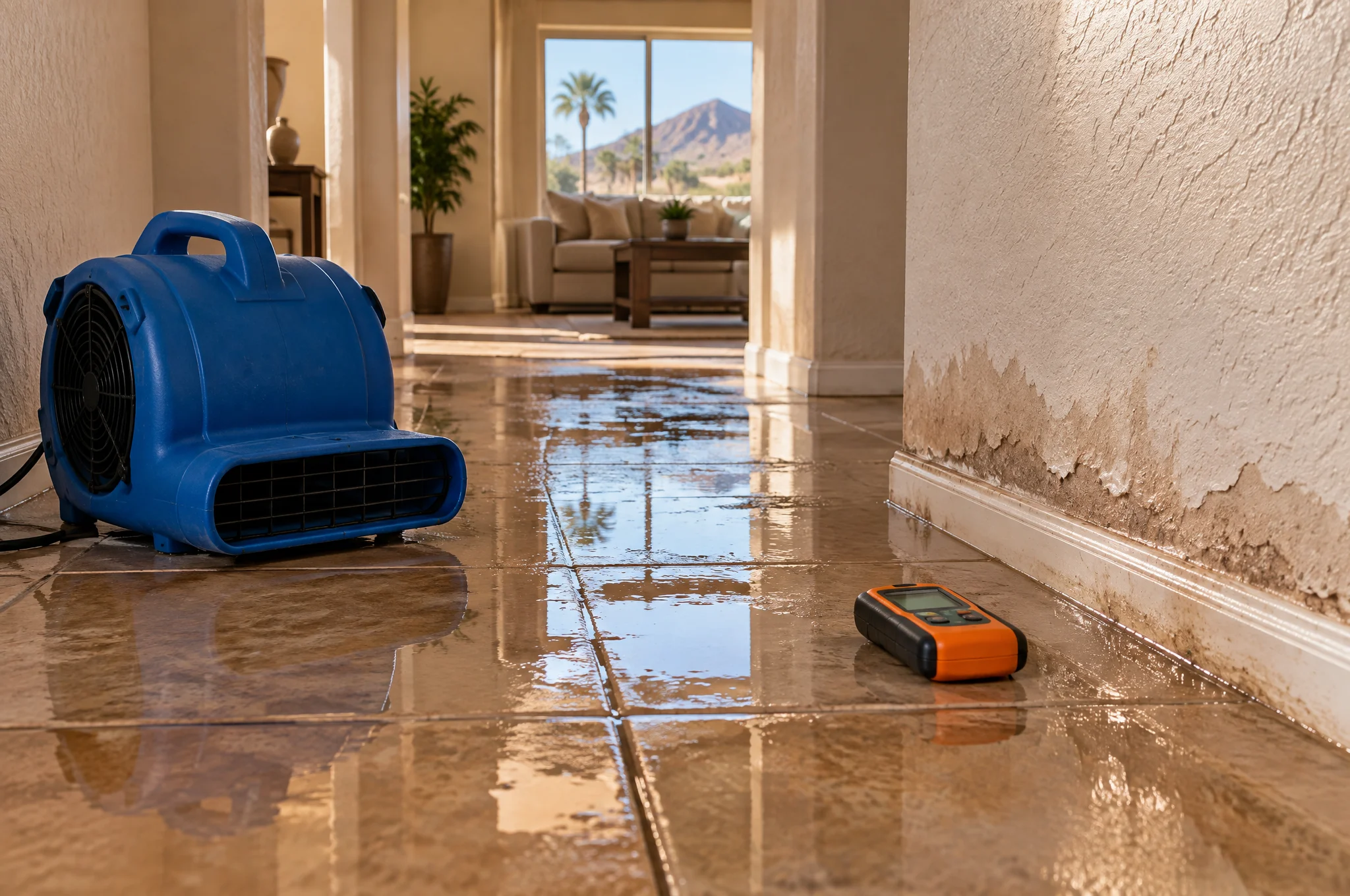
24/7 Emergency Line
Dealing with damage right now?
Live answer, 24 hours a day, no call centers. The longer water sits, the more damage it can cause.
Call 480-772-0058 Request a free inspection- Licensed, bonded and insured
- Homes and businesses, Phoenix Valley
What to do after water damage comes down to five moves in the first hour: stay safe, stop the water source, protect your belongings, document everything, and call a water damage restoration company. The longer water sits, the more damage it can cause, so act before you start mopping.
What to Do After Water Damage in the First Hour
Most water damages in Phoenix Valley homes start small: a cracked supply line, a failed water heater, a backed-up AC drain or a monsoon storm pushing water under a door. Slow leaks behind walls and under sinks can do the same harm over days. The first hour matters because water moves fast. It wicks into drywall, soaks insulation and slips under tile floors before you finish your first phone call. These emergencies rarely wait for a convenient time. Work through these steps in order, and stop if any step looks unsafe.
What Should You Do First After Water Damage?
Start with safety, not cleanup. Move everyone, pets included, out of the wet area. If water touches outlets, appliances or the electrical panel, leave them alone. Switch off the breaker only when the panel is dry and you can reach it without stepping through water. Otherwise, call your utility or an electrician.
Skip this step and a plumbing problem becomes an injury. Watch the ceiling too. A ceiling that bulges, sags or drips is holding water, and it can drop without warning, so stay out from under it. A sagging ceiling can also point to structural damage. That is the short answer to what to do after water damage: protect people first, then deal with the water.
Water Pipe Burst in House, What to Do?
Close the water source first. Find the main shutoff valve and turn it clockwise until it stops. In many Arizona homes it sits on an exterior wall near the front of the house, and some homes also have a valve at the meter box by the street. Then open the lowest faucet to drain the pipes, and turn off the water heater if the burst is on the hot side.
A burst pipe keeps pouring until someone closes the valve, and every extra minute adds water to the water removal job. Freezing is a rare cause in the Valley, so pipe bursts here more often trace back to aging pipes, corroded fittings or high water pressure. Once the home water supply is off, burst pipe cleanup starts with removing standing water and finding out which materials got wet. Hold off on permanent repairs until the structure is dry, and call one of the local restoration companies that answers 24/7.
A hidden or slab leak is a water source too. Pipes under a slab or inside a wall can leak for weeks before a stain shows. Close the main, and the leak gets handled while Triology takes care of the water damage cleanup and drying around it.
What to Do When Your House Floods?
When storm runoff or a sewage backup floods your home, treat the water as contaminated water. It can carry soil, bacteria and chemicals, and you cannot tell by looking. The honest answer to what to do when your house floods is three rules. Stay out of standing water. Keep children and pets away. Leave fans and the HVAC system off until you know the water is safe.
If water is still rising, leave, and call 911 if anyone is at risk. If you must walk through the wet area, wear waterproof boots and gloves, and never use a household vacuum on water. Monsoon floods in the Valley often arrive fast and recede fast, which leaves a layer of muddy water on tile floors and in garages. Flooding like that is an emergency even when it looks shallow. Water emergencies of every size soak walls from the bottom up. If the water came from outside, check that the sump pump is running, but only if you can reach it without stepping in water. A backup gets handled at the source, and Triology handles the water damage cleanup and drying afterward.
How to Stop Water Damage From Spreading?
Contain it. Lift furniture off wet floors and set the legs on foil or plastic blocks so stain and finish do not bleed into carpet. Pull up wet rugs. Carry belongings, papers, electronics and photos to a dry room. Blot standing water with towels, then mop what is left. Photograph every room before you move anything, so you have a record. Quick containment keeps water damages from reaching the subfloor.
The Valley's dry air tempts people to open windows and wait. That works for a puddle on tile. It does not dry wet drywall, baseboards and framing inside the walls, where moisture can stay trapped for days and lead to structural damage. In a stucco home with tile floors, water can also travel under the tile through grout lines to the subfloor. For what to do after water damage in a bathroom, the order stays the same, but check under the vanity, around the pipes and the wall behind the tub.
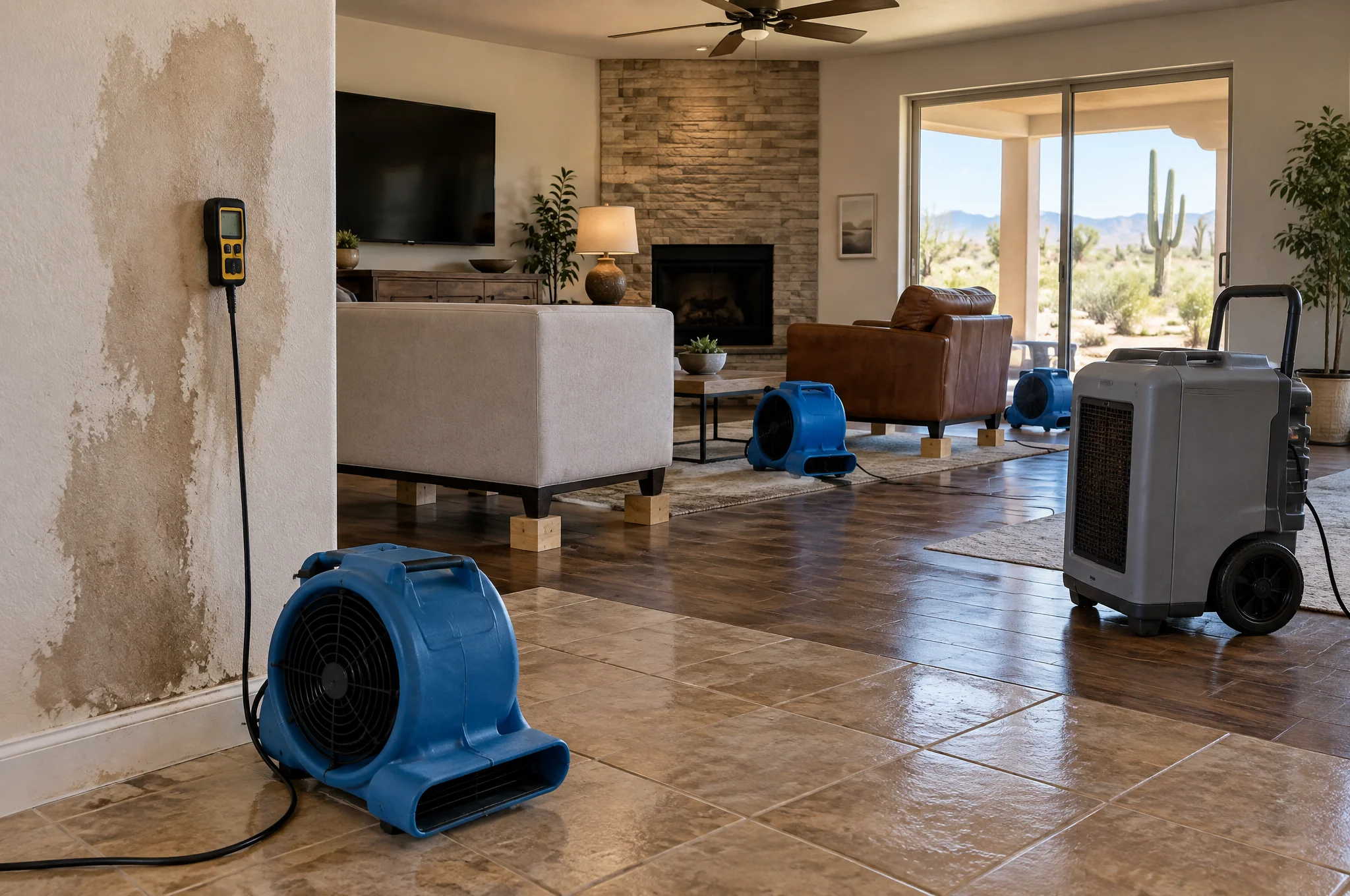
A household dehumidifier helps in a small room. Professionals bring commercial dehumidifiers and air movers sized to the space, and they use moisture meters to confirm that walls and floors have dried. Skip containment and wet drywall wicks water upward while soaked furniture warps.
How to Start Water Damage Clean Up Safely?
Water damage clean up is safe for a homeowner only when the water is clean, the area is small and no walls or ceilings are wet. Wear gloves and waterproof boots. Use a wet/dry shop vacuum or a bucket, not a household vacuum. If your home has a sump pump, confirm it runs and its discharge line is clear. Wipe hard surfaces, lift wet padding and keep air moving.
The water source tells you how far to go on your own:
| Water source | What it usually means | Handle it yourself? |
|---|---|---|
| Small spill from a sink or supply line | Clean water, but it can turn contaminated if it sits | Yes, if the area is small and walls are dry |
| Dishwashers, washing machines and other appliances | Clean to gray water (used water from washers and sinks) that often reaches cabinets and subfloors | Only a minor spill; call if cabinets or walls are wet |
| Roof or ceiling leaks | Rainwater mixes with dust and debris, and drywall can sag | No, stay out from under it and call |
| Sewage backup | Contaminated water | No |
| Storm flood or runoff | Contaminated water carrying soil | No |
Professional water extraction uses pumps that move far more water than a shop vacuum, which is why a flooded room or a soaked ceiling is a job for professionals. Do not scrub or sanitize flood or backup water yourself.
What Belongs on a Water Damage Restoration Checklist?
A water damage restoration checklist keeps the first day organized, and the order matters.
- Make the area safe: power, slippery floors and any sagging ceiling.
- Stop the water source at the main valve or the failed appliance.
- Photograph and video every wet room, item and damaged surface before you move anything.
- Report the loss to your insurance company.
- Call a restoration company that answers live.
- Start water removal and pull standing water out with pumps or extractors.
- Move furniture and valuables to a dry room, and set wet items aside for the adjuster.
- Dry the structure with air movers and dehumidifiers until moisture readings show the drywall and floors are dry.
- Remove materials that cannot be saved, such as saturated insulation, soaked padding and drywall that crumbles.
- Clean, check for mold, schedule mold remediation if it turns up, and do repairs last.
The restoration process follows the same order for appliance leaks, pipe bursts or a ceiling leak: stop, extract, dry, clean, then repair. Repairs come last because rebuilding over wet materials traps moisture behind the new finish.
Should I Call My Insurance Company Before Cleaning Up Water Damage?
Call early, but do not wait on hold before you stop the water. Most policies expect a homeowner to take reasonable steps to prevent more damage, such as shutting off the water and removing standing water. The carrier decides what your policy covers, so read your policy and ask the adjuster what they need.
Before you touch anything, take wide photos and close-ups, video each room, and list damaged items with brand and approximate age. Keep receipts for emergency expenses. If the adjuster asks to see damaged materials, set them aside instead of throwing them out. Like other restoration companies, Triology documents the loss and talks with your adjuster when you authorize it. Coverage is the carrier's call, never the contractor's.
When Should I Call a Water Damage Restoration Company?
Call a restoration company right away when any of these is true:
- Water covers more than a small area, or it has reached walls, ceilings or the subfloor.
- The water came from a drain backup, a flood or a source you cannot identify.
- A ceiling is stained, bulging or sagging.
- Water has been sitting for more than a day.
- Towels and fans are not drying it.
- Leaks from appliances or pipe bursts soaked cabinets or carpet.
A professional water damage restoration crew brings extraction pumps, air movers, commercial dehumidifiers and moisture meters, checks for structural damage, and its professionals know which materials can dry in place and which cannot. Ask any restoration companies you call whether they answer live, hold an Arizona contractor license and will document the loss for your adjuster.
Triology Restorations answers 24/7 with a live person and no call center, including for water emergencies. Gabe Rodriguez founded the company in 2021 in Apache Junction, and the crew works across the Valley, including Mesa, Chandler, Gilbert, Queen Creek, Tempe and Scottsdale. Property Damage Happens Fast. So Do We. The longer water sits, the more damage it can cause.
How Long Do You Have Before Mold Starts After Water Damage?
The EPA advises drying wet materials within 24 to 48 hours to prevent mold growth. The clock starts when the materials get wet, not when you notice the problem. Water damages left wet past that window give mold room to start.
Dry Valley air can fool a homeowner. The surface of a tile floor or a painted wall dries in hours, while the inside of the wall cavity and the subfloor can stay wet much longer. Moisture you cannot see is the moisture that lets mold start. If you already see or smell mold, avoid disturbing it. Remediation (the removal and cleanup of mold growth) is a separate step that comes after the source is stopped and the structure is dry.
Get a Free Inspection for Your Water Damage
Our team checks how far the moisture has traveled, explains what drying involves and, when you authorize it, talks with your adjuster, so you can request a free inspection.
Common Questions

Written by Triology Restorations
Owner Gabe Rodriguez and our crew handle water, mold and fire restoration across the Phoenix Valley. Arizona ROC license #347115, licensed, bonded and insured.