24/7 Emergency Line
Dealing with damage right now?
Live answer, 24 hours a day, no call centers. The longer water sits, the more damage it can cause.
Call 480-772-0058 Request a free inspection- Licensed, bonded and insured
- Homes and businesses, Phoenix Valley
A water leak while on vacation can run for days or weeks before anyone notices, and the damage grows the whole time. Plumbing leaks, failed hoses and sudden bursts are the usual causes after long vacations. A short room-by-room check when you return tells you whether you have a problem. If you do, water damage restoration in Mesa starts with stopping the water and drying the structure.
What Happens When There Is a Water Leak While on Vacation
Your home is a pressurized plumbing system. Water flows in from the city mains at steady pressure, so any break keeps pushing water until someone closes a valve. In an occupied house you hear the hiss fast. In a closed house, nothing interrupts it, so a water leak while on vacation does more harm than the same leak with people home. Slow leaks and sudden bursts both keep running through vacations.
Four sources show up again and again in Valley homes. Appliances come first: hoses on washing machines and dishwashers can fail at the fitting, and a hose that bursts can flood a laundry room. Toilets leak when the supply line gives out. A water heater in a garage or attic can leak from the tank and soak the slab below. Pipes inside walls develop pinhole leaks that drip for weeks. Clogged drains can back up into a sink or tub and overflow when the water is turned back on. Arizona adds a fifth: the air conditioner's condensate drain line, the small pipe that carries water away from the unit, can clog after months of summer runtime and overflow into a ceiling.
Short vacations leave a few days of exposure. A snowbird who closes the house from spring until fall leaves months, and monsoon storms add roof and gutters problems nobody is there to see. The longer water sits, the worse it gets: drywall softens, baseboards swell and flooring lifts. Homes with a basement or a sump pump carry one more risk: if the sump pump fails, water collects below the floor with no one to hear it.
What Water Damage Signs to Look for When You Return to a Closed Home
Before you unpack, walk the whole house once, including the garage, the laundry room, any basement and the sump pump pit.
| What you notice | What it often points to | Your first move |
|---|---|---|
| Musty smell in a shut room | Moisture in drywall, carpet pad or under flooring | Check walls and baseboards for dampness |
| Brown or yellow ceiling stain | Water above it, from a roof, condensate line or supply line | Photograph it and stay out from under any bulge |
| Bubbling paint or swollen baseboards | Water inside the wall | Press gently and note how far it spreads |
| Water meter dial moving with every fixture off | Water escaping somewhere on the property | Note the reading and call a plumber |
How do you know if water is leaking behind a wall?
Paint that bubbles, a stain that grows between visits, swollen baseboards and the sound of running water with every fixture off all point to water inside the wall. A plumber can locate the leaking line, and a restoration technician maps the moisture with a moisture meter before anything gets opened up.
How a Snowbird Home Check Catches Leaks Early
Snowbirds spend winters in the Valley, so the Arizona house often sits closed from spring until fall. A snowbird home check is a scheduled walk-through by someone you trust. A snowbird home watch is the paid version: a service that visits on a set schedule and reports what it finds. Either one is how a water leak while on vacation gets caught while it is still a small drip, and how leaks get caught during long vacations before they spread.
What a Snowbird Home Watch Should Include for Water Damage
A written checklist keeps every visit the same:
- Check ceilings, corners and baseboards in every room for stains, bubbling paint or a musty smell.
- Look under sinks and around toilets for damp cabinets or drips, check each faucet, and run water briefly to confirm the drains clear.
- Inspect hoses behind washing machines and dishwashers, plus the ice maker line and other appliances.
- Check the water heater base and drain pan, and confirm the air conditioner's drain line is clear.
- If the home has a basement or a sump pump, confirm the pit is dry and the sump pump runs.
- Read the water meter with everything off and compare it to the last visit.
- Walk the exterior: gutters, roof drains, hose bibs, any garden hoses left connected and irrigation boxes.
Give your home watch person your phone number and a second contact, plus the phone number for your plumber and your insurance agent. If the home is listed with a real estate agent or runs as a rental, tell the agent who is checking so two people do not each assume the other has it. Water sensors that send alerts to your phone add another layer. Place them by the water heater, under sinks, behind toilets and near any sump pump, set the alerts to reach a second person too, and name a neighbor who can reach the house when one goes off.
What to Turn Off Before You Leave a Closed Home
Before long vacations, shutting the water off at the source removes the pressure the city mains push behind every leak. Locate your main shutoff valve before you leave, often where the line enters the house, near the front hose bib or inside the garage. Turn it a few times before you rely on it, because Valley water is hard and mineral scale can seize an old valve. A valve that will not close fully needs a plumber, and it is better to schedule those repairs before the trip than after a leak. Also locate the shutoff for the irrigation line and the valves that feed your appliances, so you know what each one controls.
Should you turn off the water heater when the water is off?
Yes. Switch an electric unit off at the breaker, or set a gas unit to vacation mode, so it is not heating a tank that could drain if a line fails. Check your model's instructions.
Should you turn off water to the toilet, and leave faucets open?
If you cannot close the main because irrigation must keep running, close the shut off valve behind each of your toilets, the ones under sinks and both washing machine valves instead. With the main closed, they add a second layer. Do not leave a faucet open: open one briefly to bleed off pressure, then close it, or it pours onto the floor when a helper turns the water back on.
Will your pipes freeze if you turn your water off in the winter?
Turning the water off does not make pipes freeze, but water still sitting in them can, and frozen lines are how winter bursts happen. Hard freezes are uncommon in most of the Valley, so insulating exposed pipes is usually enough. A northern home left empty for winter needs the same shutoff plus drained lines.
What to Do First if You Find Water Damage When You Get Back
- Stop the water. Close the main shutoff. If it will not turn, ask your neighbor where a second shutoff sits.
- Watch the electricity. If water sits near outlets or a ceiling is wet around a fixture, stay out and switch breakers off only from a dry spot.
- Document everything. Photograph each wet area, the meter reading and the source before you move anything.
- Call your insurance company. The carrier decides coverage. We document the damage and talk with the adjuster when you authorize it.
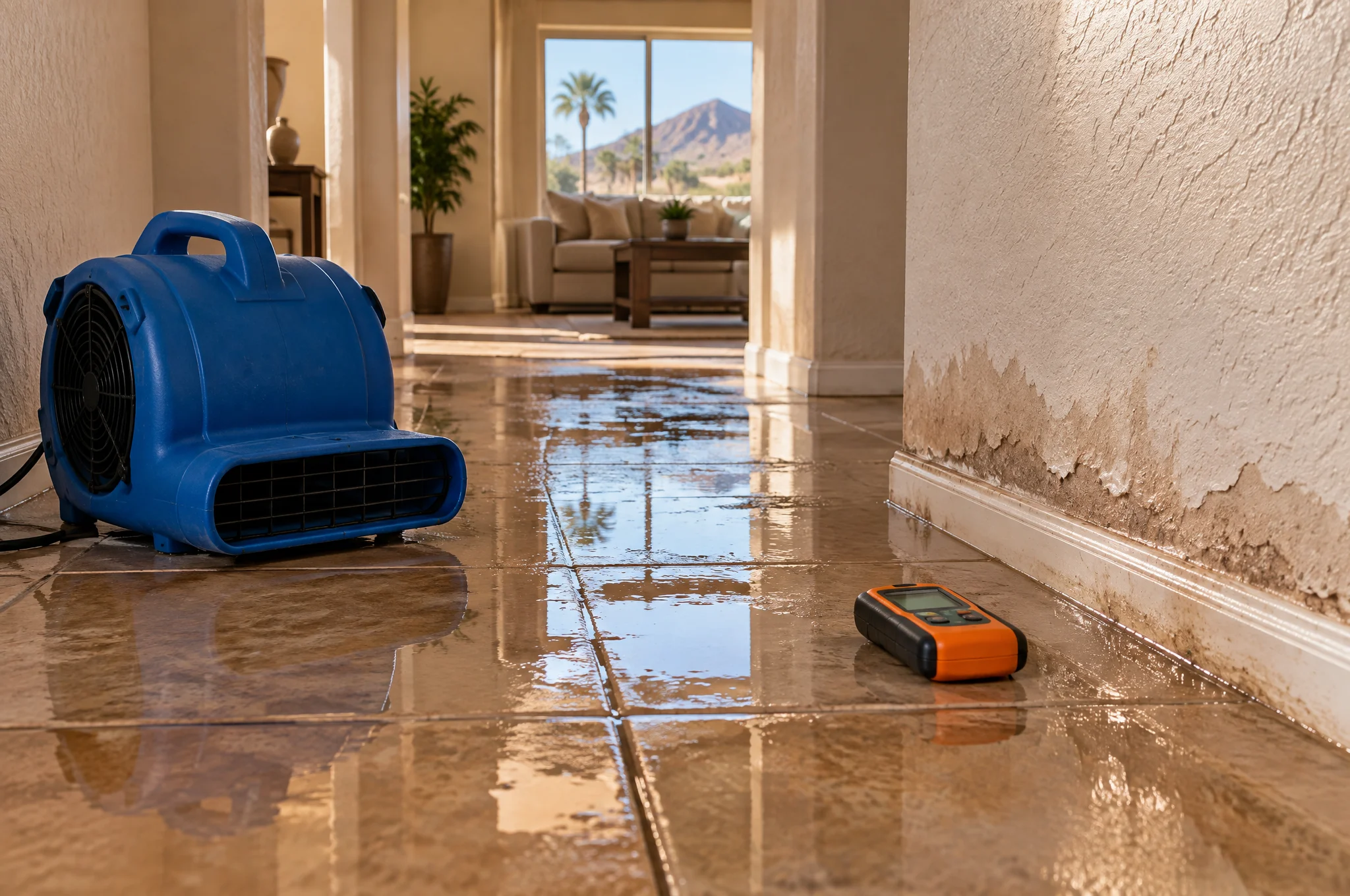
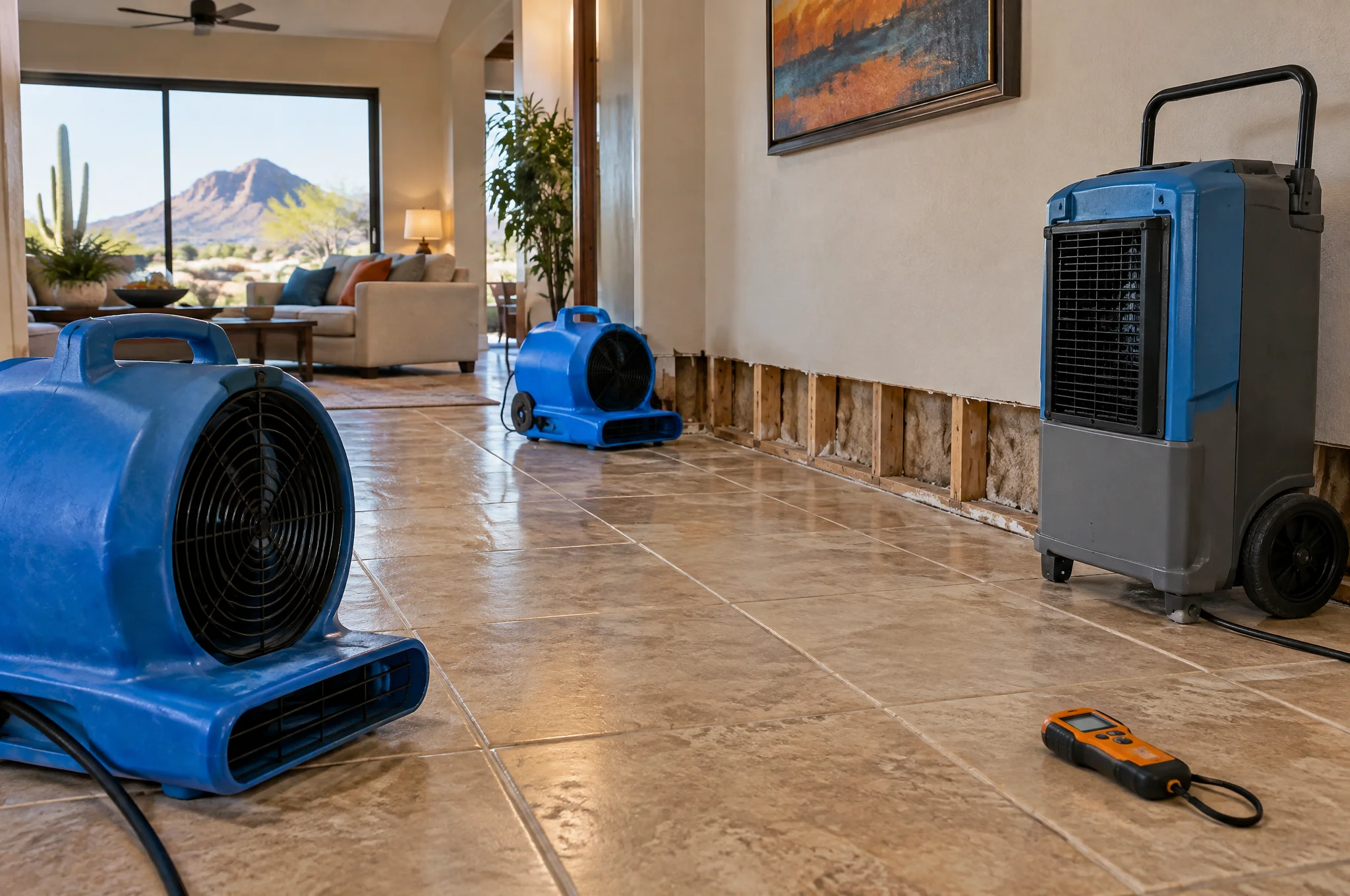
- Call Triology Restorations. A person answers live, 24/7, with no call center. Our team removes standing water, sets air movers and dehumidifiers, and tracks the drying with moisture meters. When a supply line has burst, burst pipe cleanup begins with extracting the standing water. Repairs to drywall and flooring come last, once the structure is dry.
How long does it take for mold to grow after a water leak in an empty house?
Mold may begin to grow within 24 to 48 hours on materials that stay wet, and the EPA advises drying wet materials within that window. In a closed house nobody runs fans, so wet drywall and carpet pad stay wet. Do not paint over a stain or musty area; have it assessed and dried first.
Get a Water Damage Assessment for Your Closed Home
If you open the door to a stain, a soft floor or a musty room, Triology Restorations can document the damage and explain the drying plan when you request a free inspection.
Common Questions

Written by Triology Restorations
Owner Gabe Rodriguez and our crew handle water, mold and fire restoration across the Phoenix Valley. Arizona ROC license #347115, licensed, bonded and insured.