24/7 Emergency Line
Dealing with damage right now?
Live answer, 24 hours a day, no call centers. The longer water sits, the more damage it can cause.
Call 480-772-0058 Request a free inspection- Licensed, bonded and insured
- Homes and businesses, Phoenix Valley
A washing machine leaking water on the floor usually traces back to a loose hose, a worn tub seal or a clogged drain pump. Shut off the water supply first, then check how far the water traveled. Triology Restorations handles the water damage, including burst pipe cleanup, once the source is stopped.
Why Is My Washing Machine Leaking Water on the Floor?
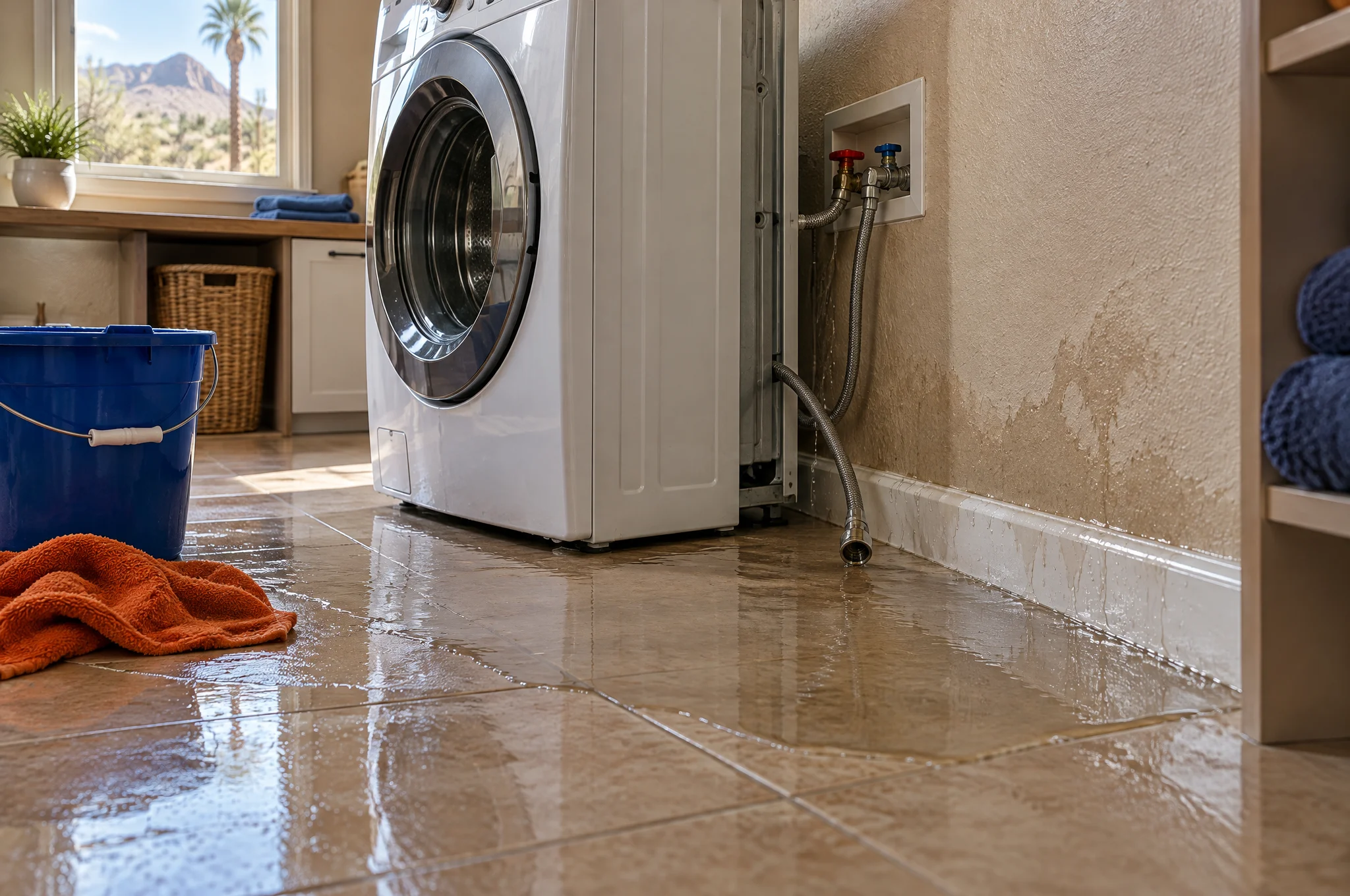
A water leak from a washer almost always starts in one of a few places, and where the water shows up tells you which one. Water behind the machine points to the supply hoses or the inlet valve (the part that lets water into the tub). Water that appears while the tub empties points to the drain hose or the drain pump. Water at the front of a front load washer points to a worn door gasket, the rubber ring around the door.
| Where the water shows up | Likely cause | Who usually fixes it |
|---|---|---|
| Behind the machine at any time | Loose or cracked supply hoses, or a leaking inlet valve | You (hoses) or a technician (valve) |
| Behind or beside the machine while draining | Split or kinked drain hose, or a drain pump with clogs | You or a technician |
| Front of a front load washer | Worn door gasket, or too much detergent | You, through cleaning or part replacements |
| Under the middle of the machine | Failed tub seal or cracked drain pump housing | Appliance technician |
| Over the top of a top load washer | Oversized loads, extra suds or a clogged detergent dispenser | You |
Why Is My Washer Leaking From the Bottom?
A washer leaking from the bottom is the hardest leak to trace, because water runs along the floor before you see it. Four causes show up most often. A split drain hose spills while the machine drains and spins. A failed tub seal, which keeps water around the drum shaft inside the tub, drips whenever the tub holds water. A cracked drain pump housing leaks while the machine drains. A loose pump filter cap leaks if nobody tightened it after cleaning. Coins, lint and sock scraps cause most clogs, and a clogged drain hose forces water out through the weakest seam.
Most machine leaks follow a timing pattern, so note when the water appears: while filling, during the wash cycle or while draining. A leak on certain cycles only usually points to the drain side, while one during filling points to a hose, the inlet valve or an overflowing detergent dispenser. Then unplug the washer, close both valves and check underneath and behind it for a damp hose coupling, a wet pump filter or a seam on the drain hose. Hose and filter cap repairs are quick fixes for most homeowners, but tub seal repairs need a technician.
Why Has My Washing Machine Flooded My Floor?
A flood is a bigger event than a drip. It usually means a washing machine hose burst, a stuck inlet valve that keeps filling the tub, or a drain that clogs completely mid-cycle. Supply hoses hold full household water pressure all day, even when the washer sits idle, so a split hose keeps pouring until someone closes the valve. Rubber hoses develop cracks after many cycles and braided hoses can fail at the coupling, so inspect both a few times a year.
What to Do Right Away When a Washing Machine Hose Bursts
The longer water sits, the more damage it can cause. If you find a washing machine leaking water on the floor, work in this order:
- Close the water supply. Turn both valves behind the washer clockwise. If a valve is stuck, close the main water valve for the house. Make sure the flow has actually stopped before you move on.
- Cut the power. Unplug the washer only if the floor near the outlet is dry. Otherwise switch off the laundry room breaker at the panel, and call an electrician if in doubt.
- Stop the spread. Block the doorway with towels and lift baskets, detergent bottles and rugs off the floor.
- Remove standing water. Use a mop, towels or a wet vac. Water on tile runs under baseboards fast.
- Take photos and video before you clean. Capture the floor, the walls, the burst hose and the model label for a possible insurance claim.
- Check the next rooms. Many Phoenix Valley homes sit on slabs, so water runs into hallways, closets and the garage. On a two story home, check the ceiling below the laundry room for a brown stain or sagging paint.
Where Does Water Damage From a Washing Machine Hide?
Water damage from a washing machine rarely stays where you see it. Water finds the lowest path and soaks into whatever it touches. These are the usual hiding spots:
- Behind baseboards and drywall panels. Drywall wicks water upward from the floor, and baseboards trap moisture against the wall.
- Under the flooring. Water slips through laminate seams, vinyl cracks and tile grout lines into the subfloor. Wood flooring may cup, which means the edges rise.
- Inside the washer box. The recessed box behind the machine can leak into the wall cavity, the hollow space between studs.
- In cabinets and closets. Particleboard cabinet panels next to the washer swell and crumble when wet.
How to Check for Laundry Room Water Damage Behind Walls and Under Flooring
Start with your senses, then confirm with a tool. Four checks show most laundry room water damage in one pass:
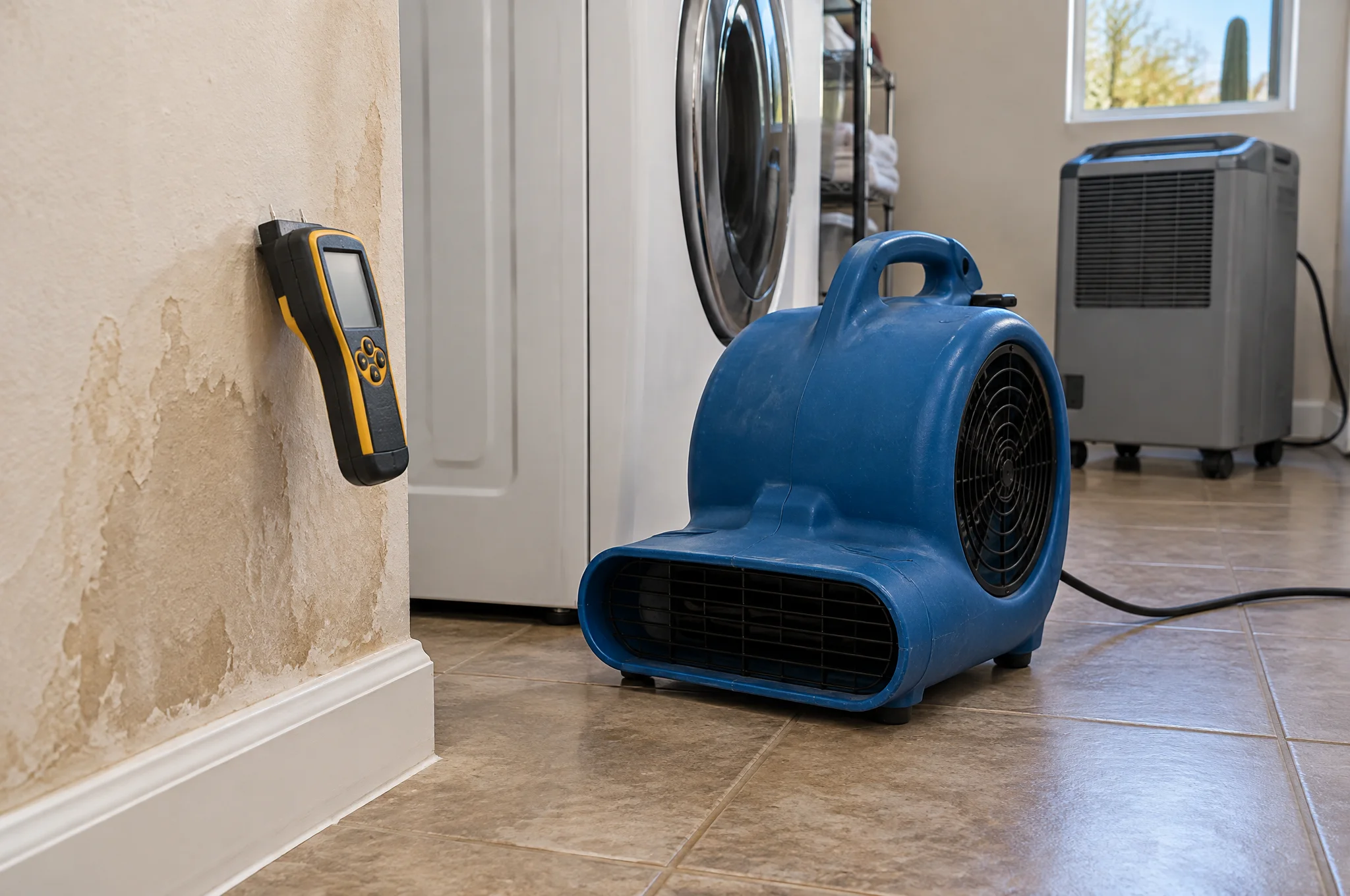
- Look. Bubbling paint, stains on drywall panels, swelling baseboards and lifting floor edges.
- Press. Soft floor spots, or drywall that feels cool and spongy.
- Smell. A musty odor from the wall or under the washer.
- Measure. A moisture meter reads dampness in drywall and subfloor without cutting anything open. Triology technicians map the wet area this way and mark where the drying equipment goes.
If a hose ran for a while, assume water reached the wall cavity until a meter says otherwise.
How Long Does It Take for Mold to Grow After a Washing Machine Leak?
A slow water leak that stays hidden gives mold more time. The EPA advises drying wet materials within 24 to 48 hours to help prevent mold growth. Dry Arizona air outdoors does not help a closed wall cavity or the space under flooring, where moisture stays trapped. Fast, thorough drying keeps water damage from turning into a second cleanup.
Can I Dry Out a Laundry Room Floor Myself After a Washer Leak?
Sometimes. It depends on what got wet and how long it sat.
| What got wet | Can you handle it yourself? |
|---|---|
| A small spill on sealed tile, wiped up right away | Usually yes, with towels, a wet vac and a fan |
| Water under laminate, vinyl or wood flooring | Usually no, because water sits beneath the surface |
| Baseboards, drywall panels or cabinets soaked | No, because moisture stays inside the wall |
| Anything that sat longer than a day | No, call professionals |
If you do it yourself, remove standing water, open cabinet doors, and run fans and a dehumidifier. Household fans move air across the surface but do not pull moisture out of the structure. Professionals dry the structure itself with air movers, dehumidifiers and moisture readings, a process called water mitigation and structural drying. Repairs such as new baseboards or drywall come last, after readings show the materials are dry.
When Should I Call a Water Damage Restoration Company After a Washing Machine Leak?
Call professionals when water left the laundry room, reached walls, wood, laminate or carpet, or ran longer than a quick spill. A washing machine leaking water on the floor for more than a moment can soak further than it looks. Property Damage Happens Fast. So Do We. Triology Restorations answers 24/7 with a live person, not a call center.
If the water leak came from a supply line inside the wall rather than the washer, that line gets fixed, and Triology handles the water damage cleanup and drying.
Does Homeowners Insurance Cover a Washing Machine Hose Burst?
In many cases, a sudden burst is something homeowners policies address, while slow leaks and wear are often treated differently. The carrier decides coverage, so read your policy or ask your agent. Triology documents the damage with photos and moisture readings and talks with the adjuster when you authorize it. Keep the burst hose and your photos until the claim is settled.
Get a Look at the Water Damage Before It Spreads
If your washer flooded the laundry room, request a free inspection and a Triology technician will check the walls and floors with a moisture meter and explain what needs drying.
Common Questions

Written by Triology Restorations
Owner Gabe Rodriguez and our crew handle water, mold and fire restoration across the Phoenix Valley. Arizona ROC license #347115, licensed, bonded and insured.