24/7 Emergency Line
Dealing with damage right now?
Live answer, 24 hours a day, no call centers. The longer water sits, the more damage it can cause.
Call 480-772-0058 Request a free inspection- Licensed, bonded and insured
- Homes and businesses, Phoenix Valley
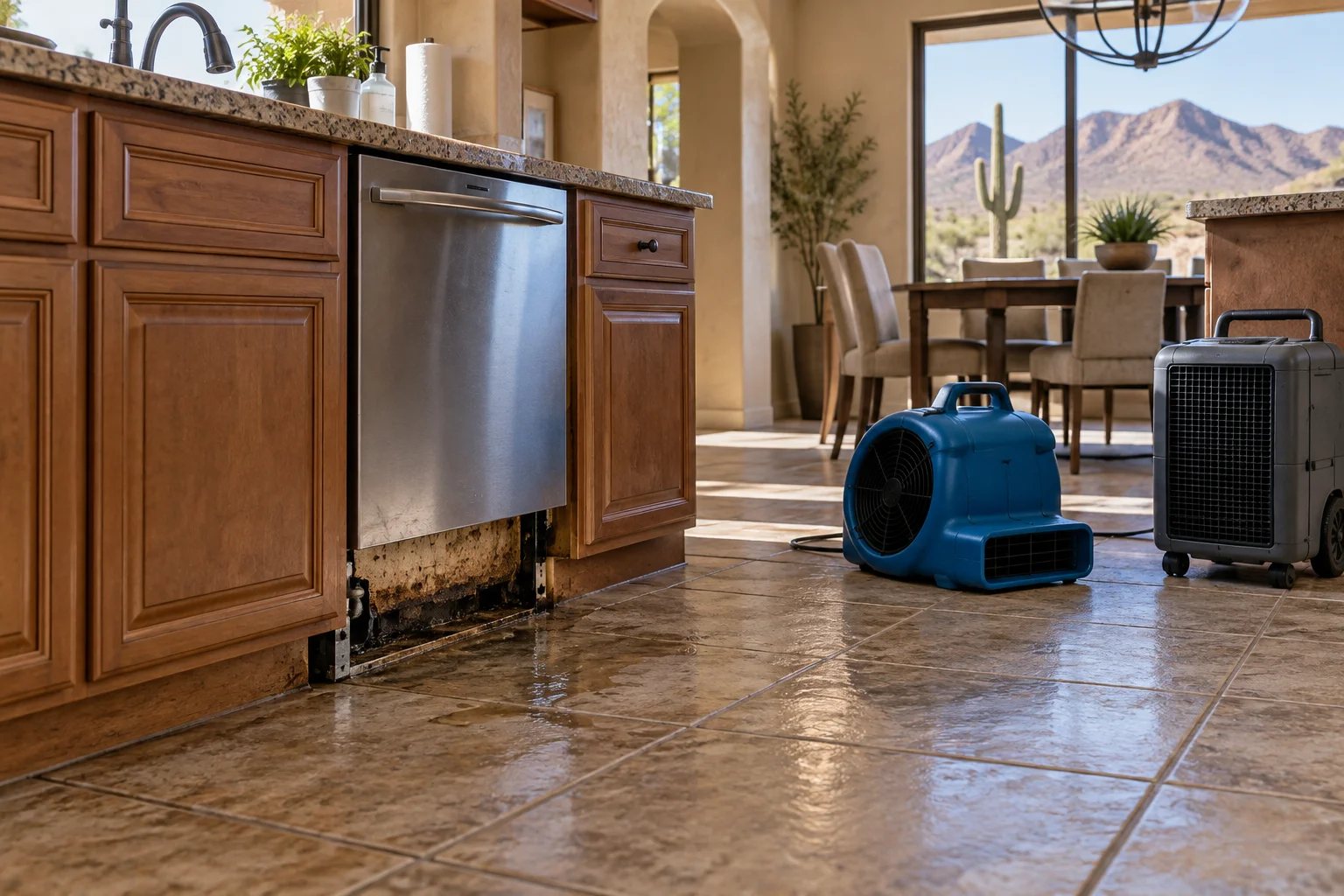
Dishwasher leak water damage often starts where you cannot see it: behind the toe kick, under the cabinets, and beneath the flooring. A leaking dishwasher can soak the subfloor for weeks before a stain appears. This guide covers the hidden signs and next steps, including our water mitigation and structural drying process.
What are the signs of dishwasher leak water damage you cannot see?
Dishwasher leak water damage hides because the water runs down, not out. It follows hose openings through the cabinet base and into the floor below. Check for these signs:
| Sign | What it usually means |
|---|---|
| Soft or spongy floor in front of the dishwasher | Water has reached the subfloor (the wood layer under your flooring) |
| Hollow-sounding tile or darkening grout | Moisture is trapped under the tile |
| Musty smell near the dishwasher door | Damp materials are holding water |
| Swollen or discolored cabinets beside the machine | Water is wicking into the cabinet base |
| Lifting baseboards or bubbling paint nearby | Moisture is moving sideways through the wall |
Look after a few cycles, because dishwasher leaks often show only while the tub is draining.
How do you find a dishwasher leaking under the floor?
Start by stopping the water. Switch off the dishwasher, close the supply valve under the sink, and flip the breaker if the area is wet. Then work through this list:
- Remove the toe kick (the panel at the bottom front of the cabinet) and shine a flashlight along the floor.
- Check the door seal and gasket for cracks, flattened spots or caked detergent.
- Follow the supply and drain hoses to their connections, looking for drips, rust or crusty residue.
- Lay dry paper towels under the front, run a short cycle, and check them at the end.
- Press along the tile or flooring edge. A spongy give or a hollow sound means moisture below the surface.
A dishwasher leaking under the floor rarely leaves a puddle on top. Many Phoenix Valley kitchens have tile over a concrete slab, and water travels along the slab into grout lines and cabinet bases before it shows. Our technicians confirm the wet area through moisture mapping during drying, so you are not guessing from the surface.
How does water damage under kitchen cabinets start from a dishwasher leak?
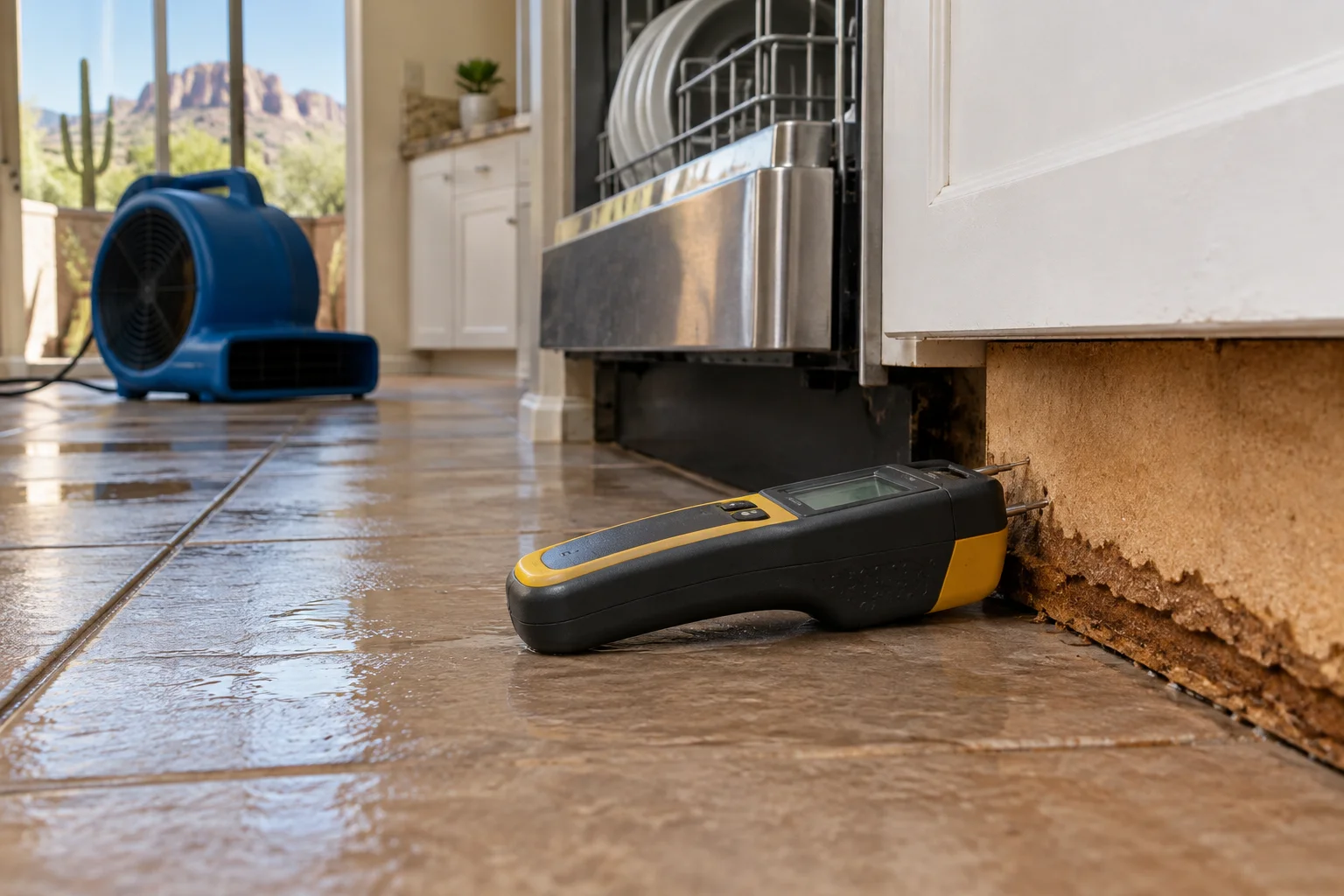
Water damage under kitchen cabinets begins with a slow drip at a hose connection, pump seal or door seal. The drip lands on the cabinet base, which is often particleboard (compressed wood chips and glue). Particleboard drinks water like a sponge, then swells, softens and crumbles at the edges. Dishwasher leak water damage spreads sideways as well as down, so the sink base and neighboring cabinets get wet next. Leaks that run only during certain cycles are the hardest to catch, since the floor dries between runs. By the time swollen cabinets show, the floors under them are usually wet too, and our water damage restoration team checks both together.
What does a dishwasher leaking water when not in use mean?
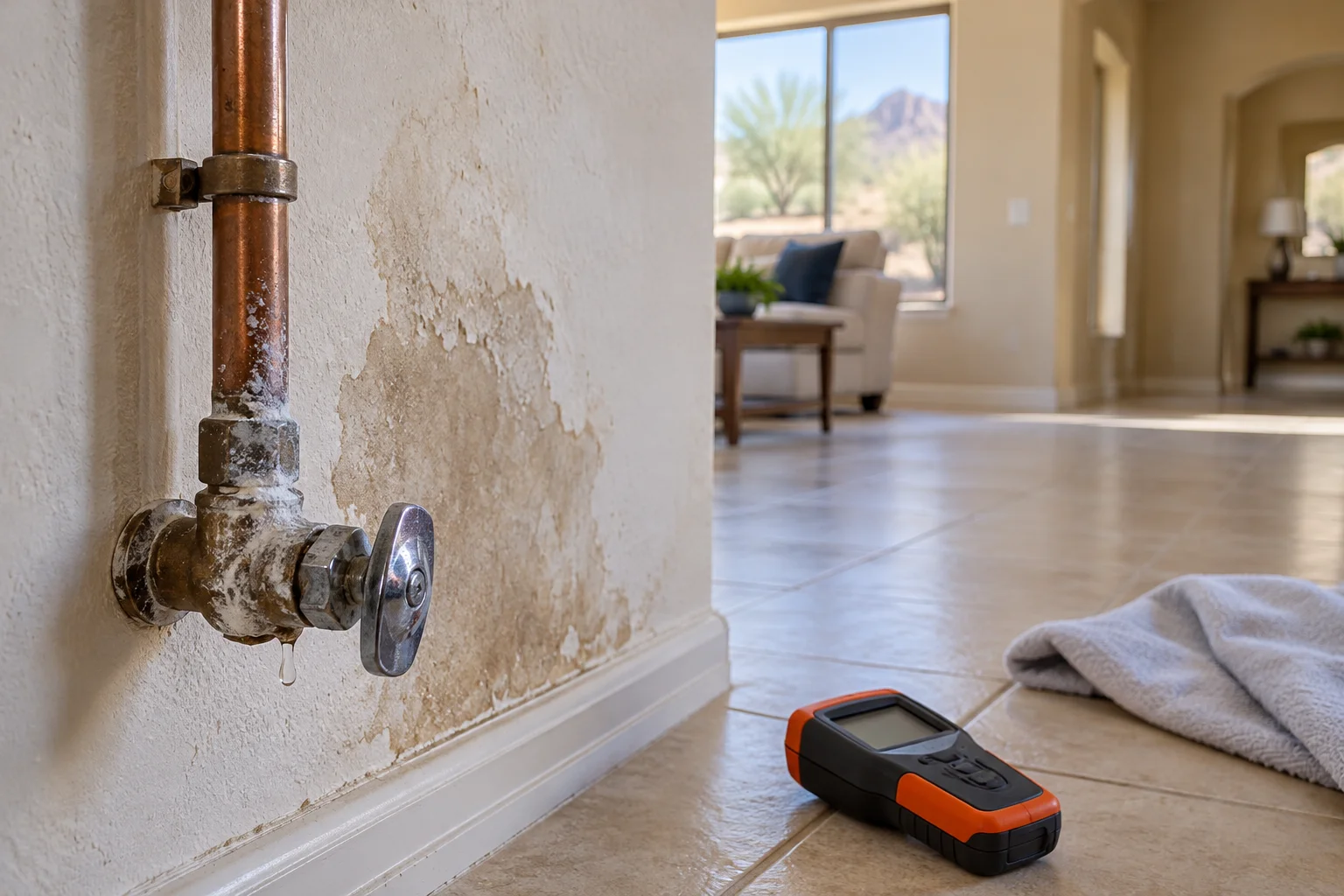
A dishwasher leaking water when not in use points to the supply side, because that line stays under pressure all day. The usual suspects are an inlet valve (the valve that lets water into the machine) that no longer closes fully, a cracked supply hose, or a loose fitting. These drips are slow and constant, which is why the cabinet floor stays wet with no cycle running. Close the supply valve under the sink and watch the area for an hour. Valve and hose replacements belong to the appliance side. Once the source is stopped, we handle the wet cabinets and floors.
What should you do about a dishwasher leaking from the pump?
A dishwasher leaking from the pump usually means a worn pump seal or a cracked housing at the bottom of the tub. The water collects in the base pan under the machine, so you may see only a thin puddle at the front, or none at all. Stop using the machine, shut off the power and the water, and pull the lower front panel to look for a damp base. Seals and pump replacements are appliance repairs, and a leaking dishwasher should stay off until they are done. Meanwhile, soaked cabinets and floors keep absorbing water, so start drying early.
What causes a dishwasher leaking and not draining?
When a dishwasher is leaking and not draining, standing dishwasher water pushes out through the door seal, vent or hose joints. These are the common causes:
| Cause | What you may notice | First check |
|---|---|---|
| Clogged filter | Gritty film, food debris, slow drain | Remove and rinse the filter at the bottom of the tub |
| Kinked or blocked drain hose | Water left after the cycle | Look for bends behind the unit |
| Disposal plug left in place (new installs) | Never drained from day one | Check the disposal inlet |
| Failed drain pump | Humming, no drain | Listen as the drain phase starts |
| Too much detergent | Suds at the dishwasher door | Cut the dose and run a rinse |
Arizona's hard water leaves mineral scale on filters and seals, which can speed several of these. Clean out the debris first, because running more cycles only adds water to a full tub.
When should you call a water damage restoration company for a dishwasher leak?
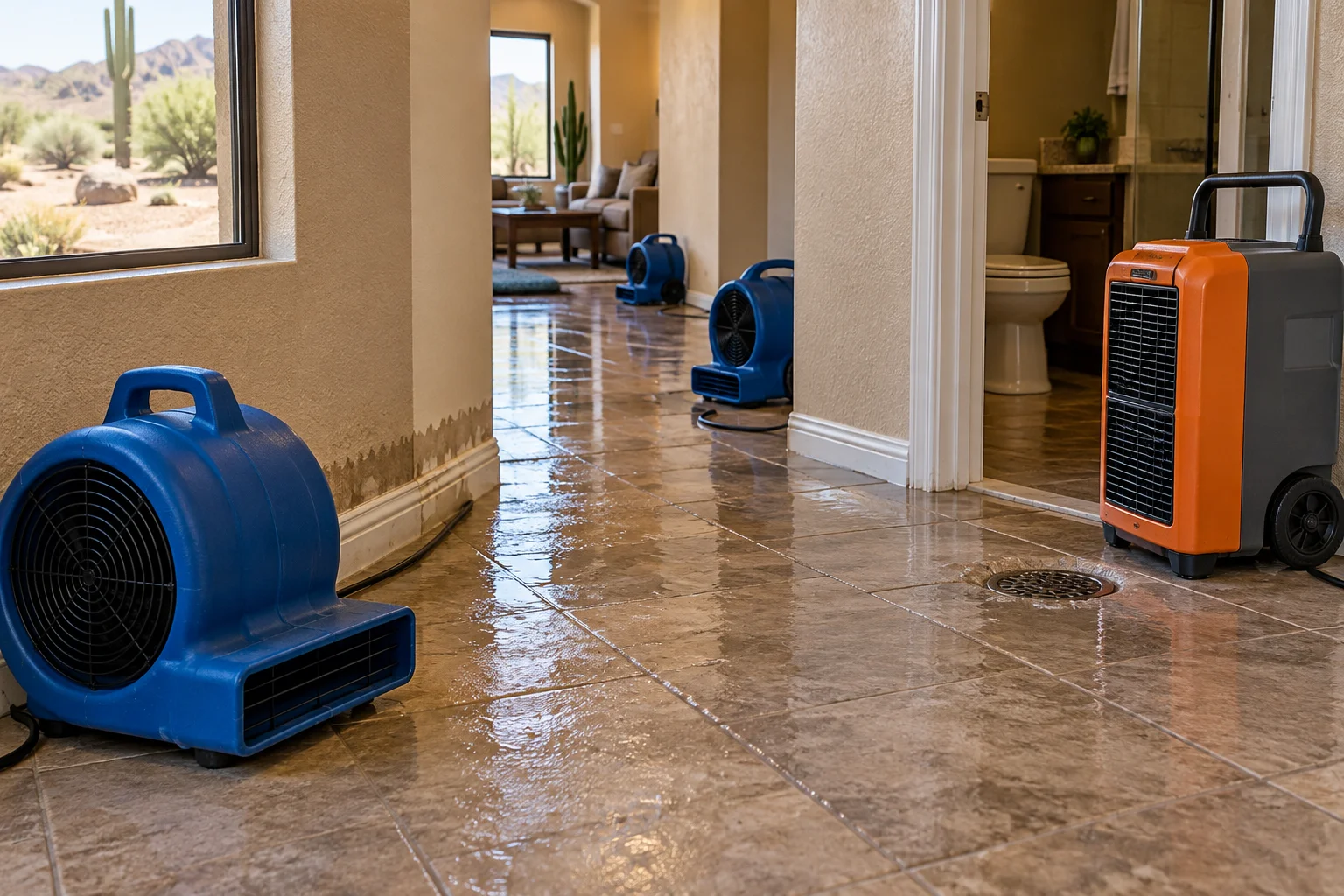
Call as soon as water has left the machine and reached the floor, cabinet base or walls, or when you notice soft flooring, swollen cabinets or a musty smell. The longer water sits, the more damage it can cause. Triology Restorations answers 24/7 with a live person, never a call center. Our crew extracts standing water, sets air movers and dehumidifiers, maps moisture in the floors and cabinets, and keeps drying until the readings come back dry. Repairs come last, and only to fix the water damage. A small spill you wiped up right away does not need professionals.
How long does it take a dishwasher leak to damage the subfloor?
It depends on the volume of water and what the floor is made of. A burst hose can soak a plywood subfloor in a single afternoon, while a slow seep may take weeks or months to soften it. In dry Phoenix Valley air, the surface can look fine while the layers below stay damp, which hides damages longer. The EPA advises drying wet materials within 24 to 48 hours to limit mold growth, and that is the window we plan around. The sooner moisture mapping starts, the more of your cabinets and floors can usually be dried in place instead of removed.
Can a hidden dishwasher leak cause mold under the kitchen floor?
It can. Mold needs moisture and an organic material to feed on, and wet particleboard, plywood and drywall paper provide both. A hidden leak keeps those materials damp in a dark, closed space, which is the setup mold favors. A musty smell near the dishwasher, dark spots inside the cabinet or a stain on the toe kick are signs to act on. We focus on water damage first, because quick drying removes the moisture mold depends on. If you spot growth, tell our team during your inspection.
Does homeowners insurance cover dishwasher leak water damage?
Sometimes, but your carrier decides. Many policies treat sudden, accidental water discharge differently from long-term seepage or lack of maintenance, so your policy wording matters. Take photos and video of the leak, the cabinets and the floors, note the appliance model, and keep damaged materials until the adjuster has seen them. Triology documents the water damage and talks with your adjuster when you authorize it. We handle that paperwork through our insurance claim assistance, though coverage stays the carrier's call.
Get a Free Look at Hidden Dishwasher Leak Damage
Found a dishwasher leak, or a floor that feels soft near the machine? Request a Free Inspection and our team will look at the affected area and explain the drying steps before any work begins.
Common Questions

Written by Triology Restorations
Owner Gabe Rodriguez and our crew handle water, mold and fire restoration across the Phoenix Valley. Arizona ROC license #347115, licensed, bonded and insured.