24/7 Emergency Line
Dealing with damage right now?
Live answer, 24 hours a day, no call centers. The longer water sits, the more damage it can cause.
Call 480-772-0058 Request a free inspection- Licensed, bonded and insured
- Homes and businesses, Phoenix Valley
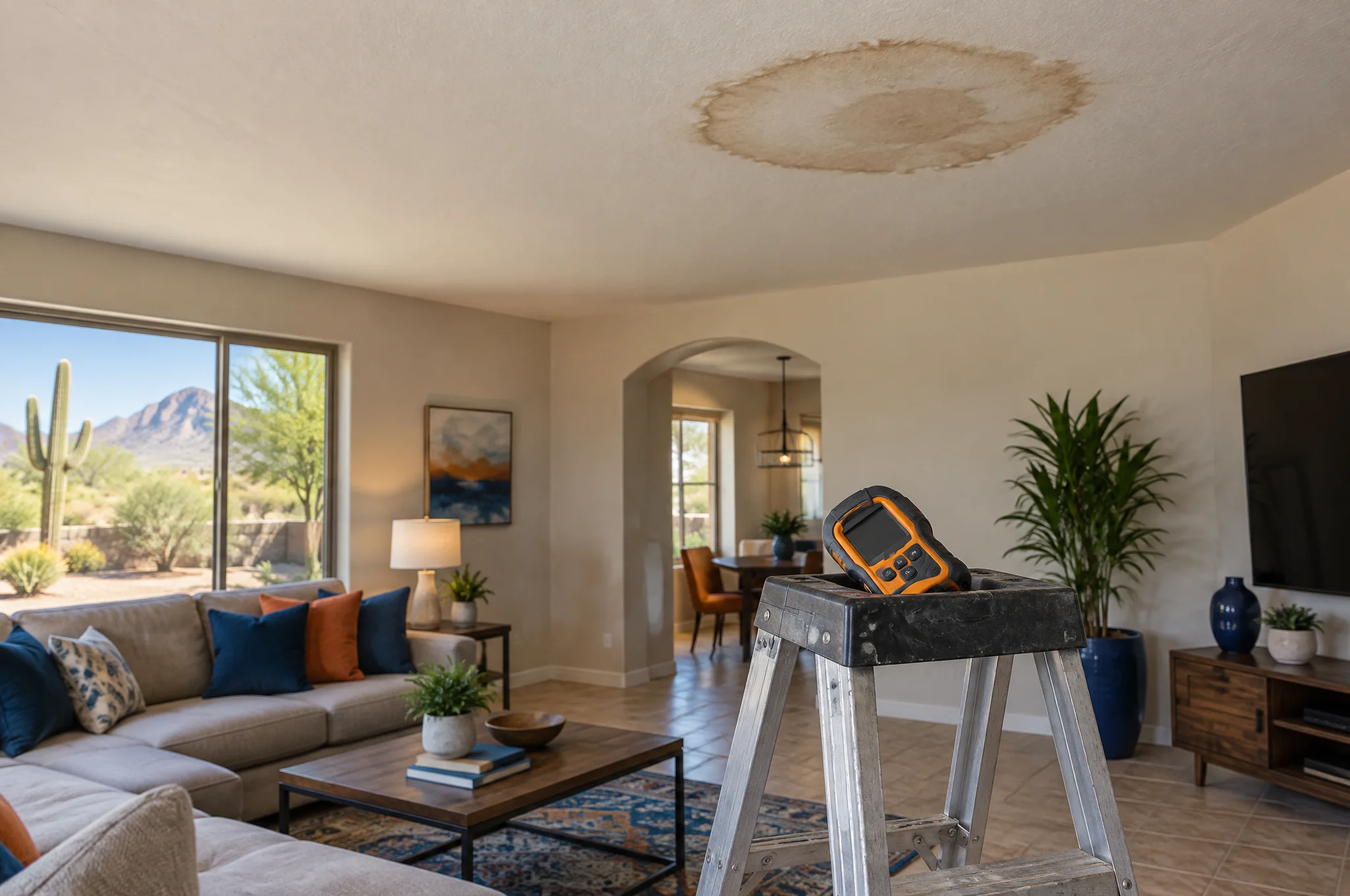
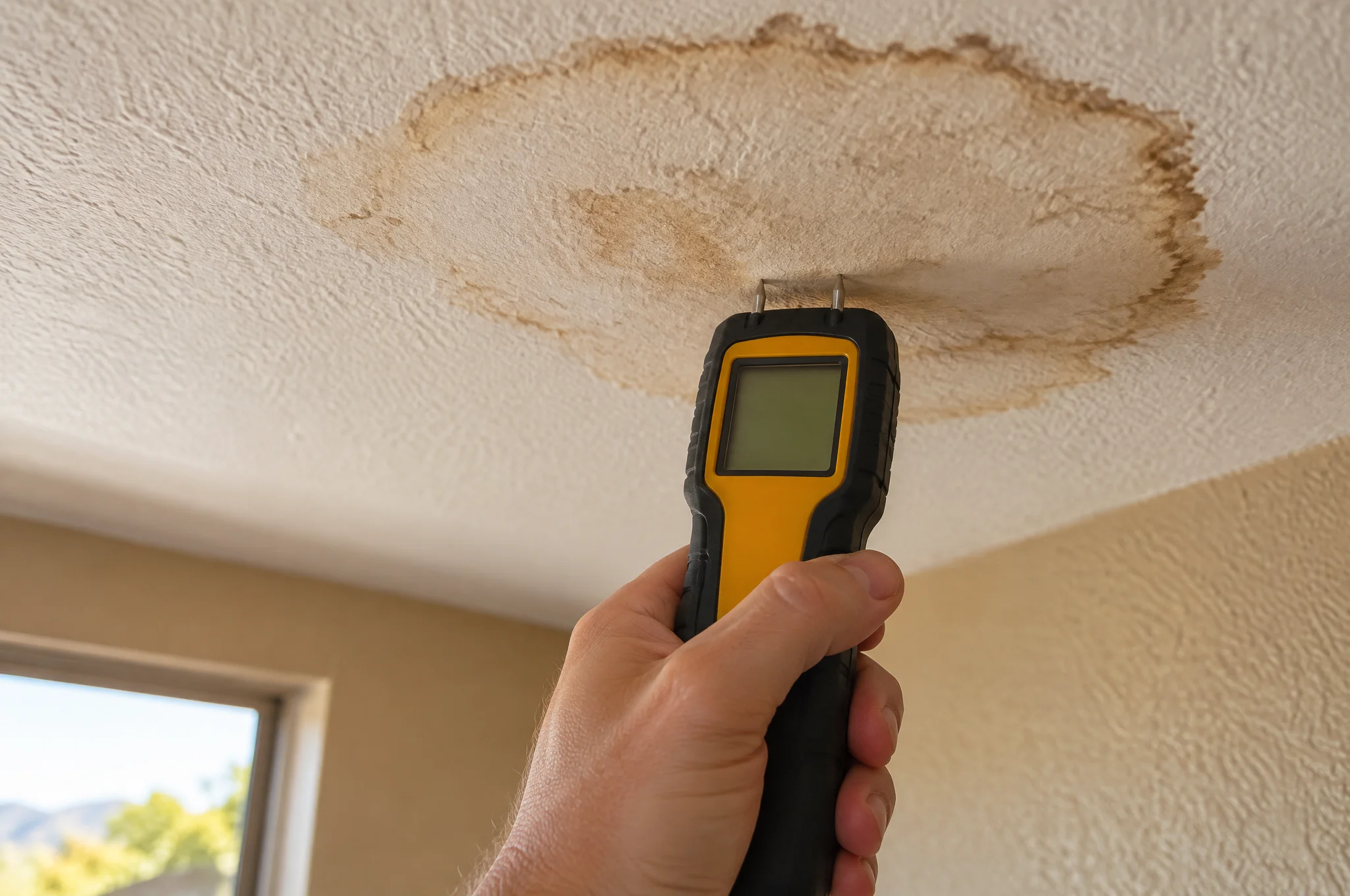
A brown spot on the ceiling is water that has soaked into the drywall and then dried, or is still soaking in. Old stains stay the same size and feel dry. Active leaks grow and feel damp. Knowing which one you have decides whether you need ceiling water damage repair now or later.
What causes a brown spot on the ceiling?
A leak stains the ceiling brown because the water picks up dust, rust and tannins (natural brown compounds from wood framing) on its way through the attic and insulation. When the water evaporates, those compounds stay behind in the drywall, the gypsum board that forms most ceilings, and settle into a ring. Water that causes brown spots on a ceiling nearly always comes from one of these five common causes.
| Source | What the stain looks like | Where to look |
|---|---|---|
| Roof leak | Brown ring that grows after monsoon rain | Roof deck in the attic under a cracked tile, lifted shingle or failed flashing around vents |
| Plumbing leak | Spot under a bathroom, kitchen or laundry room that grows with use | Supply pipes, drain lines, shower pans and toilet seals on the floor above |
| HVAC drain overflow | Spot near a vent or air handler that grows when the AC runs | Clogged condensate drain line and full drain pans in the attic |
| Condensation | Faint yellow or tan shadow along ducts, with no clear ring | Uninsulated ducts and bathroom exhaust fans that vent into the attic |
| Gutters and roof edges | Stain along an exterior wall line | Clogged gutters, blocked roof drains, cracks in the parapet cap |
The most common cause in Phoenix Valley homes is a roof leak. Tile roofs shed monsoon rain well, but the underlayment, the waterproof layer beneath the tiles, wears out in desert heat before the tile does. Water also gets in through a cracked tile, a lifted shingle on homes that use them, or dried-out sealant around roof vents. Plumbing comes next. A slow drip from a supply line or a failing shower pan stains the ceiling below for weeks before anyone notices, and bathrooms are the usual starting point because they pack pipes, drains and seals into a small space. HVAC drain overflow comes third, because many Valley air handlers sit in the attic where nobody checks the drain pans or the condensate drains. Gutters matter too. When gutters overflow or stucco cracks near the roofline, water runs down the wall and shows up as brown spots along the exterior edge of a room.
Why do I have a yellow stain on the ceiling?
A yellow stain on the ceiling usually means thinner water than a brown one. Light sources such as condensation or a small drip carry fewer particles, so the mark dries pale yellow or tan. Water that damages a ceiling slowly can leave yellow first and turn brown as the stain ages and the leak keeps feeding it. Brown stains mean the water passed through dirty insulation or roof debris first. Yellow can also mean a leak is new and has not yet pulled much from the attic. Color alone cannot tell you whether water is still arriving, so use the checks below.
How can you tell an old vs new water stain?
Compare size, feel and edges over a few days. Trace the outline with a pencil and write the date beside it. Check again after the next rain, shower or air conditioning cycle. If the line has moved, the leak is active.
| Sign | Old stain | Active leak |
|---|---|---|
| Size over a week | Stays the same | Edges creep past your pencil line |
| Feel | Dry and firm | Cool, soft or damp |
| Edge | Sharp, dark ring | Blurry and wet-looking |
| Paint | Flat | Bubbling, peeling or sagging |
| Timing | No change | Worse after rain, showers or AC use |
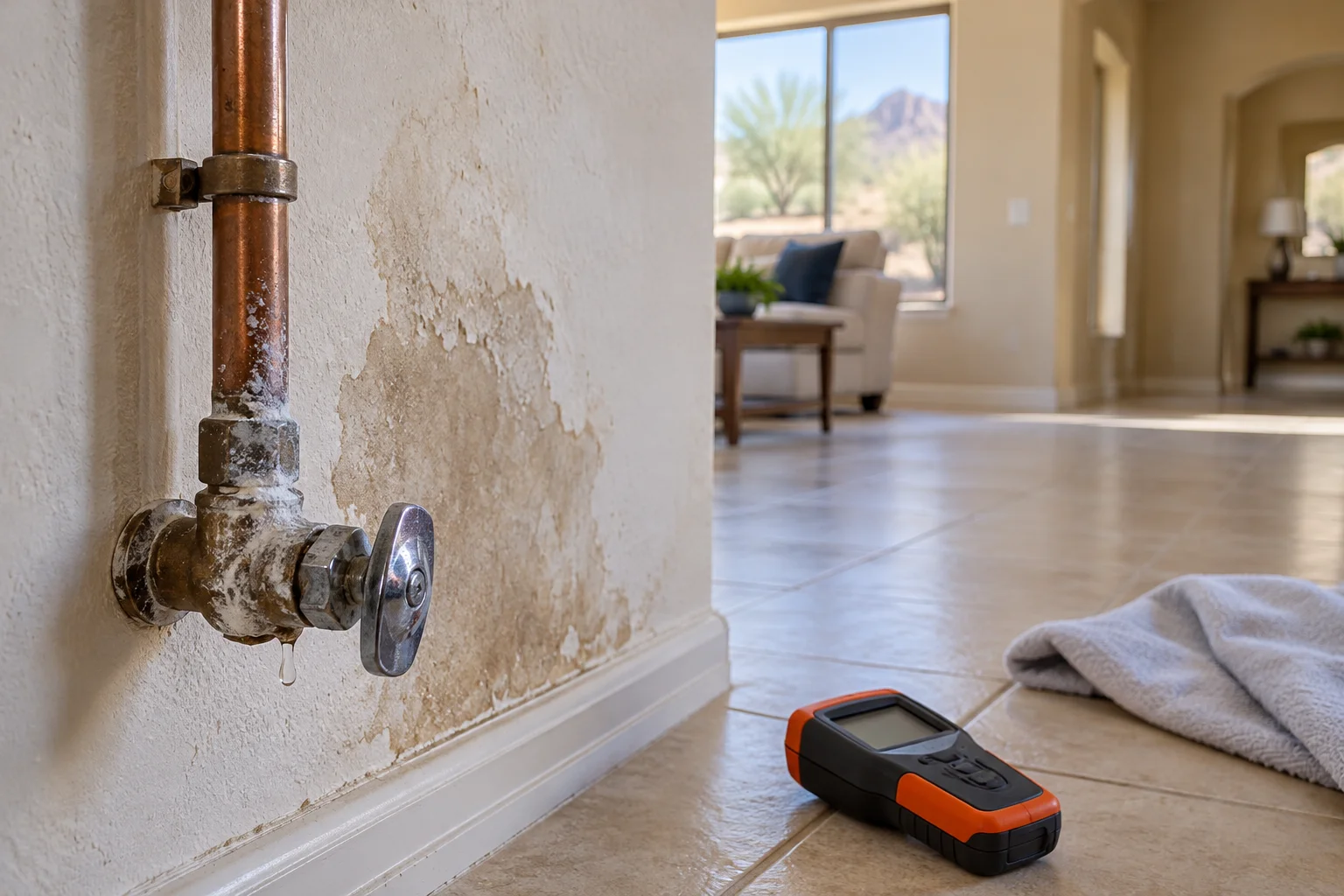
Press the spot gently with a gloved finger. Cool, soft drywall is wet. A moisture meter, a handheld tool that reads the water content inside drywall, gives a firmer answer. Our technicians use one to map where moisture reaches beyond the visible stain, since drywall often holds water well past the edge of the ring. If you can reach the attic safely, look for wet insulation, dark wood and a drip on the ductwork. Go early in the morning, because Valley attics get dangerously hot by midday in summer. A professional inspection covers the same ground with more tools, and a brown spot on the ceiling that stays dry on the meter is a good sign the damage is old.
How long does a ceiling leak take to leave a stain?
It depends on how much water is moving. A burst pipe or a hard monsoon downpour can push enough water through to mark a ceiling within a day or two. Water damages insulation and drywall quietly before any color appears. A slow drip from aging pipes behaves differently. Insulation and drywall soak it up first, so a stain may take weeks to show. That means the stain is often the last sign, and the wet area above is bigger than the spot below. The longer water sits, the more damage it can cause.
Can you get a water stain on the ceiling but no leak?
Yes. A water stain on the ceiling but no leak usually comes from one of three situations.
- An old leak that already stopped. The roof was patched or the pipe was fixed, but nobody repainted, so the ring stays behind. Even after repairs are finished, an old leak can stain the ceiling for years.
- Condensation. Moisture from the air collects on a cool surface. The next section covers how to spot it.
- Water that traveled. Water runs along rafters, ducts and pipes and can drop several feet from where it entered. The spot below looks like it has no source overhead, but the source sits elsewhere in the attic. Some leaks also show only under certain conditions, such as rain from one direction or a shower upstairs.
Are condensation stains on the ceiling different from leak stains?
Yes, in color, shape and timing. Condensation forms when warm, humid air touches a cool surface. In the Valley it shows up in summer, when monsoon humidity meets cold ducts in a hot attic, and in bathrooms where exhaust fans vent into the attic instead of outdoors.
Condensation stains are usually fainter yellow or tan, spread in a wide shadow along a duct or vent and have no hard ring. A leak stain has a defined brown ring with a darker edge and grows after rain or water use. Condensation fixes are about airflow and insulation: sealing and insulating ducts, sending bathroom fans out through roof vents instead of into the attic and correcting damaged duct joints. If condensation keeps the drywall damp, mold can grow on the paint, so deal with it early.
How to get rid of brown water stains on the ceiling?
Quick fixes fail without the right order: stop the source, let the ceiling dry, then clean and prime. Painting over a wet stain traps moisture, and the brown shows through again. For a small, dry stain on intact drywall, the order is:
- Find and stop the source. A roof leak, a plumbing line or an HVAC drain has to stop before anything else matters. Roof repairs and plumbing repairs stop the water; paint never does.
- Confirm the ceiling is dry. The stain should stay the same size through a rain and a week of AC use, and a moisture meter should read dry.
- Clean the surface. Wipe with a damp sponge and mild dish soap, without soaking the drywall, and let it dry.
- Apply stain-blocking primer. Cover the stain and a few inches past its edge.
- Paint. Two coats of ceiling paint finish the job.
If the drywall is soft, sagging, cracked or crumbling, cleaning and paint will not solve it. Wet drywall and insulation need to come out and dry first. A paint-only fix on a wet ceiling is a common way for a stain to return. Wet material is water damage work, not a paint job.
Will stain-blocking primer keep a ceiling stain from coming back?
Only if the ceiling is dry and the source is stopped. Primer seals old tannins and water marks so they do not bleed through paint. It does not stop moisture. If water is still arriving, the brown ring pushes through the primer and paint in time. Shellac-based and oil-based primers are the usual choice for dark brown stains, and water-based stain blockers suit light yellow ones. Test a small patch first to see whether the stain bleeds through.
When does a ceiling stain need professional water damage restoration?
Call professionals when any of these apply. Most of them mean water has spread past what you can see:
- The ceiling sags, bulges or drips.
- The stain keeps growing after the source seems fixed.
- Insulation above the stain is wet, or the wet area is larger than a dinner plate.
- Stains show in more than one room.
- The water came from burst pipes, a plumbing supply line, a water heater pan or an HVAC overflow.
- You see fuzzy growth or smell something musty.
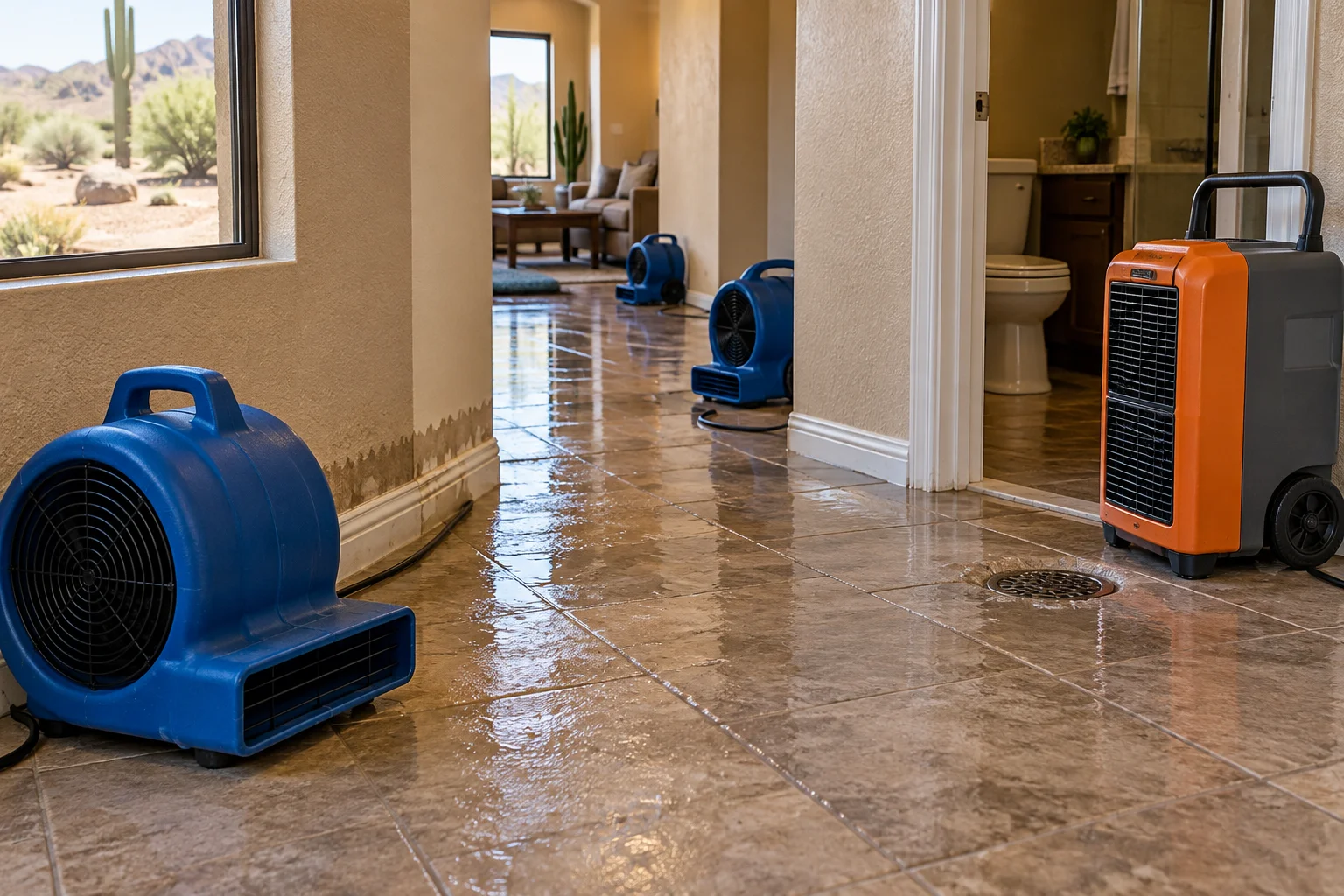
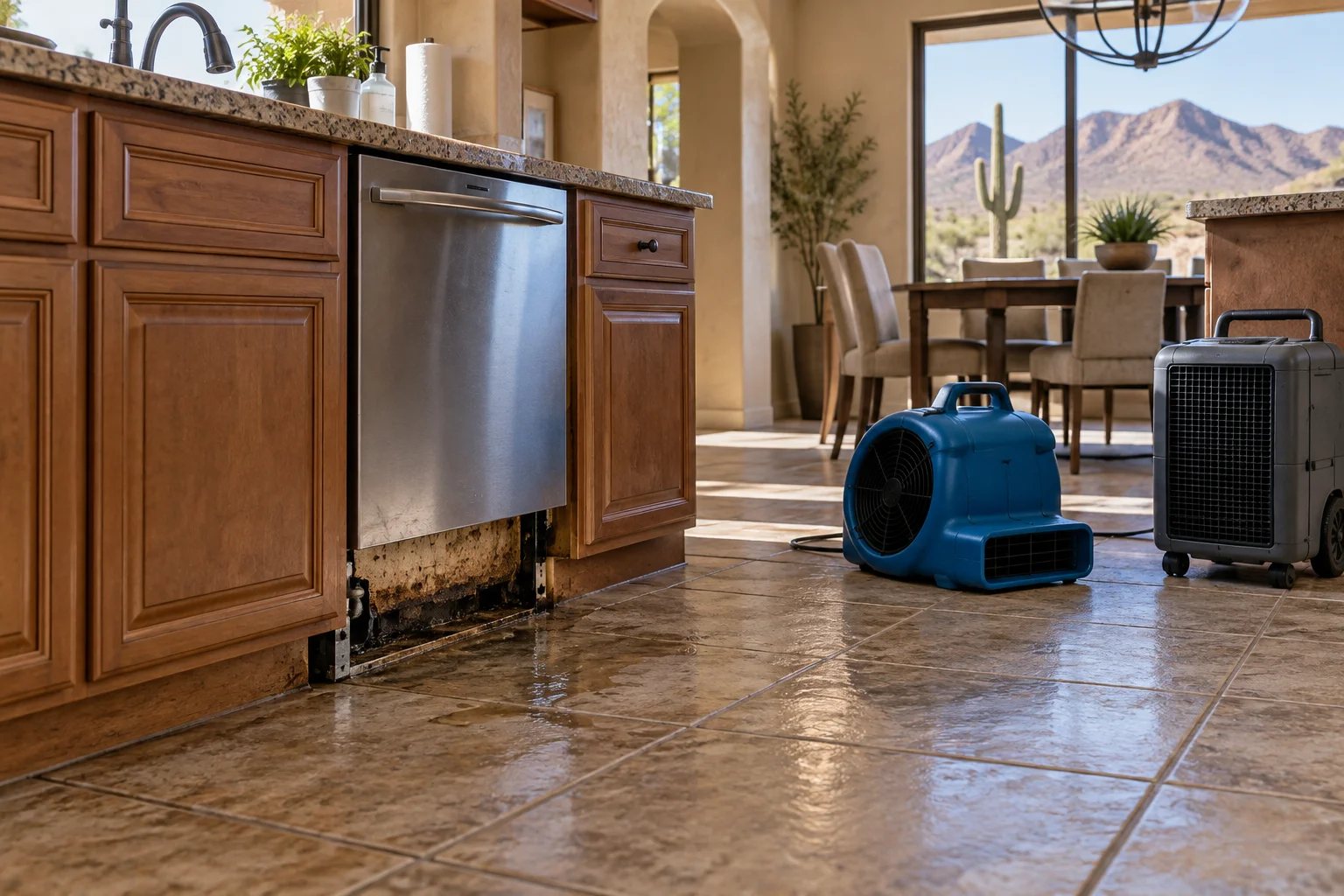
Once the leak itself is stopped, Triology Restorations handles the water damage cleanup and drying. Our technicians map the wet area with a moisture meter, extract standing water, remove drywall and insulation that cannot dry in place, and run air movers and dehumidifiers until the readings come back dry. That process is water mitigation and structural drying. Ceiling repairs come last, after the structure is dry. A live person answers our line 24/7, with no call center in between.
If the damage may involve an insurance claim, we document it and talk with the adjuster when you authorize us to. The carrier decides coverage.
Is a brown spot on the ceiling dangerous?
The spot is only a mark. The wet material behind it is the concern. Drywall that holds water gets heavy and can sag or fall, so keep people and furniture out from under a bulge. Water near a light fixture, ceiling fan or wiring is an electrical risk, so turn off the breaker for that circuit before touching anything. Water damages insulation too, and wet insulation stops doing its job, which can push cooling bills up in a Valley summer.
Does a brown ceiling stain mean there is mold?
Not by itself. A brown stain is a water mark. Mold needs moisture and time, so a ceiling that stays damp can grow it, especially in bathrooms. Signs to watch for are fuzzy or speckled growth in black, green or white, a musty smell, and a stain that never dries. Only an inspection or testing by professionals confirms what is growing. Drying the drywall fast gives mold less to work with.
Get a Free Inspection of That Ceiling Stain
Not sure whether your stain is old or still active? Our team can check how far the moisture reaches and tell you what is wet: Request a Free Inspection.
Common Questions

Written by Triology Restorations
Owner Gabe Rodriguez and our crew handle water, mold and fire restoration across the Phoenix Valley. Arizona ROC license #347115, licensed, bonded and insured.