
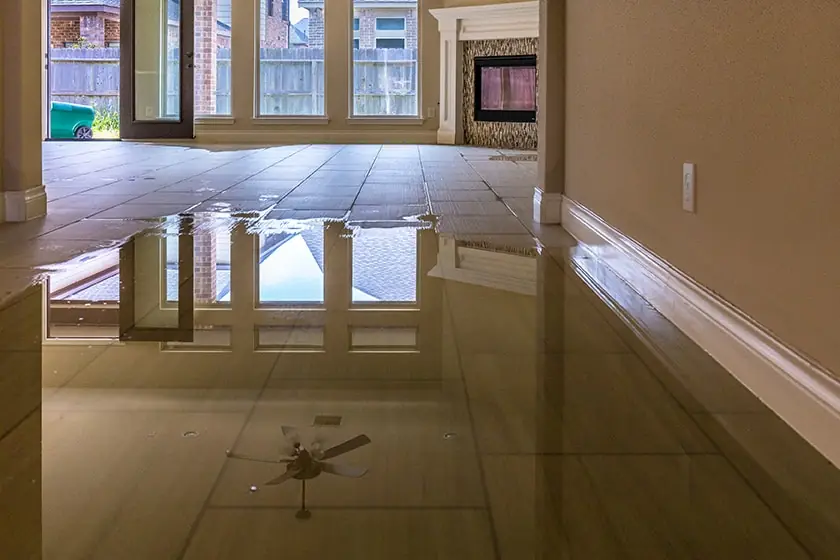
Flood Damage Restoration in Queen Creek
Mud, Runoff and Wind-Driven Rain Inside Queen Creek Homes
Our team handles flood damage restoration in Queen Creek when water arrives from outside: runoff off open land, an overflowing wash, irrigation that jumps a berm, or rain driven sideways under a roof edge. We pull out the water and mud, remove what the water ruined and dry the rest. Our line, 480-772-0058, is answered live through every storm.
- Answered by a person 24/7 during storms
- Free inspection after monsoon or winter rain
- Arizona ROC licensed contractor, license #347115
- Homes, barns, shops and businesses
Services in Queen Creek
What happened at your property?
- Water Damage RestorationExtraction, drying and restoration
- Emergency Water ExtractionStanding water removed fast
- Burst Pipe CleanupPipe, water heater and appliance leaks
- Flood Damage RestorationMonsoon and flood cleanup
- Ceiling Water DamageLeaks through the ceiling, dried and restored
- Water Mitigation and DryingMoisture mapping and structural drying
- Mold RemediationContainment, removal and the moisture source
- Fire and Smoke DamageSoot, smoke odor and firefighting water
- Commercial RestorationOffices and commercial properties
What Our Customers Say
Real reviews from homeowners and businesses across the greater Phoenix area.
Sonoqui Wash, Queen Creek Wash and Where Storm Water Runs
Two washes shape flooding in town. Sonoqui Wash crosses the west side, and the Town, Gilbert and the Flood Control District of Maricopa County channelized it in phases. Phase I, from Higley Road to Chandler Heights Road, was finished in spring 2008, and the Town's releases say it took about 160 to 200 homes and roughly 800 acres out of the FEMA floodplain. Ranchos Jardines, the large no-HOA plat west of Sossaman Road, was one of the areas in that floodplain before the channel redirected the flow. Phase II, about 3.5 miles from Chandler Heights Road to Riggs Road and from Hawes Road to Crismon Road, was designed to hold a 100-year storm.
A changed flood map does not keep a heavy storm from pushing water across a lot and under a door. On July 11, 2008, wind and rain closed Power, Riggs, Hawes and Sossaman roads at the Sonoqui Wash, with up to 1.5 feet of mud and debris on the pavement. Water carrying that much silt does not stop at the street.
Queen Creek Wash is the other one. The county's stream gage at Rittenhouse Road logged 551 cubic feet per second on January 2, 2023, close to the record of 575 set on January 5, 1995. Both of those were winter storms, not monsoon storms, which is why we tell owners here that flood season is not only July and August.
Our restoration work across Queen CreekMonsoon Damage in Queen Creek Is Often Wind First
Not every storm loss is a flood from the ground. During the July 9 and 10, 2021 monsoon, high winds knocked down trees at nearly every home in some Queen Creek neighborhoods, brought down power lines and broke car windows, and a local animal rescue lost a dozen structures. That kind of monsoon damage in Queen Creek starts at the roof and the windows: a lifted shingle, a cracked pane or a fallen limb lets rain into the attic and the walls.
We handle the water side of that, from the wet attic insulation to the soaked carpet below. A roofer or glazier handles the roof and windows. If the water came through a ceiling, our page on ceiling water damage in Queen Creek covers that path in detail.
Ceiling water damage in Queen CreekNot sure what you need?
Call and a live person will walk you through it, any hour, or request a free inspection.
Post-Storm Inspection Points for Flood Cleanup in Queen Creek
Outside water travels in ways a quick look misses. On a post-storm visit we check:
- Door thresholds, slider tracks and garage door seals on the side facing the runoff
- Stucco base and weep screed where mud has piled against the wall
- Baseboards and the bottom of drywall in rooms next to the wet exterior wall
- Attic insulation and ceiling drywall under any wind-damaged roof area
- Casitas, barns and shops that sit lower than the main house
- Irrigation berms on flood-irrigated lots, in case storm water and irrigation water combined
- Carpet pad and tack strip along every wet wall
Each wet area goes on the moisture map and into the photo record, which supports a claim if you decide to file one.
How Flood Restoration in Queen Creek Runs From Start to Finish
We handle storm water as contaminated until we know otherwise, so the order below builds that in.
- Step 1
Phone Call and Road Check
We ask whether power is on in the wet rooms, whether water is still coming in and whether the roads to your property are open. Washes can close streets for a while after a storm.
- Step 2
Flood Water Removal and Mud Out
Flood water removal in Queen Creek usually means water mixed with silt. We pump and extract the water, then shovel and scrape out mud and debris before cleaning the floor.
- Step 3
Remove What Floodwater Touched
Carpet, pad, the lower section of drywall and soaked insulation that contacted outside water are usually removed rather than dried. We show you the line we are cutting to and why.
- Step 4
Clean and Treat Hard Surfaces
Slabs, studs and cabinet frames that stay are cleaned of silt and treated before drying begins.
- Step 5
Dry and Document
Drying equipment runs until readings reach a dry standard, and every step goes into a written record for you and, if you authorize it, your adjuster.
Storm Damage Restoration in Queen Creek on Both Sides of the County Line
Most of Queen Creek is in Maricopa County, but some neighborhoods, Ironwood Crossing among them, and the LG Energy Solution site along State Route 24 sit in Pinal County. That changes which county flood district and permitting office apply to a property. It does not change our work: storm damage restoration in Queen Creek runs the same way on either side.
The bigger flood structures here sit along the Central Arizona Project canal. The Powerline, Vineyard Road and Rittenhouse flood retarding structures, between Baseline Road and Ocotillo Road, protect about 72 square miles of Maricopa and Pinal county land downstream. They reduce how much water reaches town, though local runoff on large open lots can still find a low door.
Storm Losses We Handle Here
- Runoff that enters under doors and garage seals
- Wind-driven rain through roof edges and windows
- Mud and silt tracked into living areas
- Water in barns, shops and casitas
- Combined storm and irrigation water on flood-irrigated lots
Ready for a free inspection?
We look at the damage, document it and explain the next steps before any work starts.
Related Help in Queen Creek
Flood cleanup ties into several other jobs.
Water Extraction in Queen Creek
When storm water is still standing on the floor, extraction comes first.
Water Damage Restoration in Queen Creek
The whole water damage process in town, from first call to final readings.
Flood Restoration Valley-Wide
Our general guide to outside water, contamination and what gets removed.
Request a Free Inspection
If the storm has passed and nothing is still wet, send us the details online.
Common Questions
Still have a question? Ask us directly.
24/7 Emergency Response
Property Damage Cannot Always Wait Until Tomorrow
Call Triology Restorations for responsive residential and commercial restoration services throughout the Phoenix Valley.
Available 24/7 for emergency calls.
Request an Inspection in Queen Creek
Tell us what happened and a member of the Triology Restorations team will contact you.
Call 480-772-0058